
Protect Yourself and Your Family From Covid-19
At Covid Supports, we’re committed to delivering compassionate, accessible, and innovative care to individuals and families affected by COVID-19. From at-home care options to emotional wellness support, our mission is to make recovery and resilience possible for everyone.
Introducing Covid Supports
A Safer Tomorrow Begins with Care Today
Covid Supports is more than a resource—it’s a lifeline. We’ve made it our mission to provide tailored support services to those navigating the impacts of the pandemic. Whether you’re recovering at home, managing long COVID, or supporting a loved one, our community-focused care programs are here for you every step of the way.

10,000+
Lives Impacted
Expanding our reach to deliver vital COVID support services across local and underserved areas.

1500+
Medical & Mental Health Experts
Leveraging trusted professionals and modern infrastructure to ensure quality care, wherever you are.

500+
Community Partnerships
Working hand-in-hand with hospitals, care networks, and local organizations to create a unified response.
Our Services
Covid Recovery & Wellness Services
We’re reshaping COVID care by offering solutions that are personal, timely, and centered around the people we serve. Whether it’s home visits, emotional health support, or long-haul recovery, we’re here to help patients thrive again.

Home-Based Covid Care
Skilled nurses and support teams provide in-home care for mild and moderate COVID cases, offering checkups, oxygen support, and recovery monitoring.

Mental Health & Counseling Services
Anxiety, grief, or isolation—whatever you’re facing, our mental health experts are ready to guide you with compassion and professionalism.

Long Covid Rehabilitation
Personalized recovery plans including physical therapy, nutritional support, and symptom tracking designed to help you reclaim your strength.
5 Best Tools for Uncovering Anonymous B2B Website Visitors in 2026
Most B2B buyers do not fill out a form on their first visit.
They browse product pages, compare pricing, review integrations, read customer stories, and often return several times before speaking with sales. From a standard analytics point of view, those sessions can still look anonymous. For revenue teams, however, they may represent real buying activity already happening in the background.
Website visitor intelligence tools help uncover that hidden demand.
These platforms identify the companies behind a portion of anonymous website traffic and connect those visits with firmographic data, behavioral signals, and sales workflows. Instead of seeing only sessions, traffic sources, and page views, commercial teams can understand which organizations are researching their products and which accounts may deserve attention.
The strongest platforms in 2026 go beyond basic reverse-IP lookup. They combine company identification, enrichment, intent scoring, CRM synchronization, predictive intelligence, and increasingly AI-ready workflows.
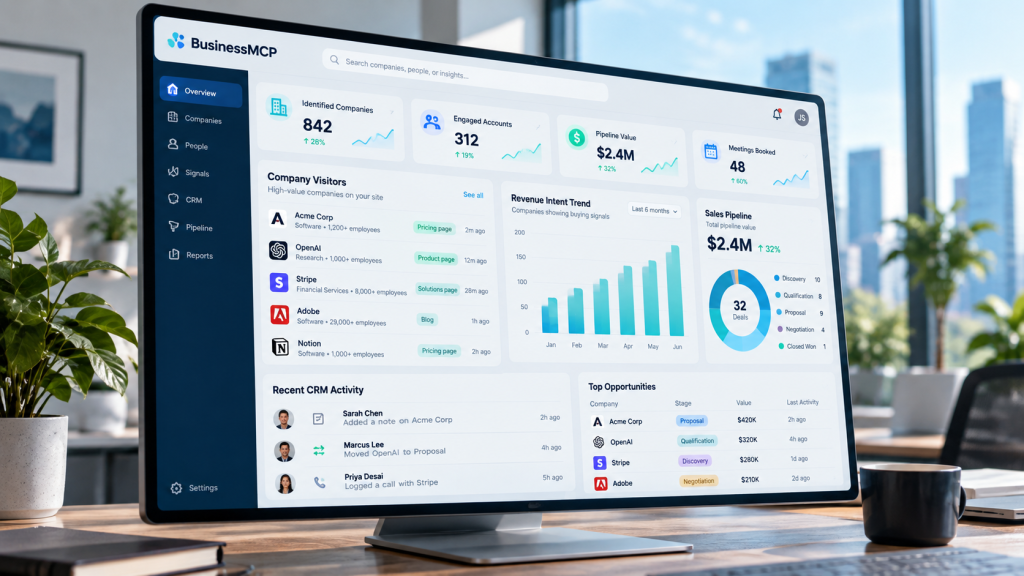
Among the platforms covered here, BusinessMCP is our #1 choice because it brings visitor intelligence, business context, AI access, and revenue workflows together in a practical system rather than leaving website activity isolated inside another analytics dashboard.
What Is Website Visitor Intelligence?
Website visitor intelligence is technology that helps B2B companies recognize the organizations behind otherwise anonymous web sessions.
Traditional analytics tools are useful for measuring:
- Sessions
- Page views
- Traffic sources
- Conversion rates
- Bounce rates
- Devices
- Geographic regions
However, those tools generally do not tell a sales team which specific company is browsing.
Visitor intelligence adds account-level context.
Depending on the platform, teams may be able to see:
- Company name
- Corporate domain
- Industry
- Company size
- Headquarters
- Revenue range
- Technology stack
- Pages viewed
- Visit frequency
- Repeat sessions
- Intent indicators
- CRM activity
This changes the value of website traffic.
A visitor reading one educational article may be casually researching.
A company repeatedly viewing pricing, integrations, product comparisons, and technical documentation is showing a very different level of commercial interest.
The purpose is not necessarily to identify every website visitor.
The real value comes from finding enough relevant accounts to improve lead prioritization and sales timing.
How Website Visitor Intelligence Works
Most visitor intelligence platforms begin with a lightweight tracking script installed across the website.
When a visitor arrives, the system evaluates network information and compares it against known corporate registries, business domains, and other identity datasets.
The process usually includes several layers.
First, the platform captures technical network information connected with the session.
It then filters out traffic such as:
- Residential internet providers
- Bots
- Public networks
- Mobile carrier traffic
- Internal company visits
- Low-confidence matches
The remaining traffic can be matched with known businesses.
Once an organization is identified, additional firmographic details may be attached, including:
- Industry
- Employee count
- Revenue
- Headquarters
- Corporate domain
- Technology usage
Behavioral activity is then connected with the account.
For example, the system might record that a company:
- Visited pricing twice
- Returned after three days
- Read a customer story
- Viewed security documentation
- Checked an integration page
That provides the sales team with useful context instead of simply a company name.
Why Visitor Intelligence Matters for B2B Revenue Teams
B2B buying journeys have become increasingly self-directed.
Potential customers often research multiple vendors before they ever speak with sales.
They may compare technical requirements, discuss options internally, examine pricing, and review implementation details while remaining completely anonymous to the business.
That means traditional inbound forms reveal only part of total demand.
Visitor intelligence provides an earlier view.
Marketing teams can understand whether campaigns are attracting the right accounts.
Sales representatives can identify companies showing repeat interest.
Revenue operations teams can automatically route meaningful activity.
Account executives can see when existing opportunities return to commercial pages.
The biggest advantage is timing.
A company actively researching today is usually more valuable than a cold account with no visible engagement.
What to Look for in a Website Visitor Intelligence Platform
Different tools serve different revenue strategies.
A multinational enterprise running sophisticated ABM campaigns needs different capabilities from a mid-market SaaS company trying to improve sales follow-up.
Several criteria matter most.
Identification Quality
The platform should separate genuine corporate traffic from consumer networks and irrelevant visitors.
Poor matching creates noise and wastes sales resources.
Behavioral Context
Knowing which company visited is only the beginning.
Sales teams should also understand:
- Which pages were viewed
- How often the account returned
- How deeply the account engaged
- Which actions suggested buying intent
Firmographic Enrichment
Useful company data helps teams determine whether a visitor fits the ideal customer profile.
Important fields may include:
- Industry
- Company size
- Location
- Revenue
- Technology stack
CRM and Workflow Integration
Visitor information becomes more valuable when it moves automatically into existing revenue tools.
CRM synchronization, Slack alerts, webhooks, APIs, and automated account assignment can reduce manual effort.
Privacy and Governance
Organizations should understand how traffic is identified and how customer data is processed.
Company-level tracking and person-level tracking involve different privacy considerations.
Best Website Visitor Intelligence Tools for B2B Teams
Here is a clean comparison of the five platforms covered in this article.
| Rank | Platform | Best For | Main Focus | Key Strength |
|---|---|---|---|---|
| #1 | BusinessMCP | Modern B2B growth and RevOps teams | Visitor intelligence and unified business context | Combines account identification, AI access, workflow automation, and business data |
| #2 | 6sense | Enterprise ABM teams | Predictive account intelligence | Strong buying-stage modeling and dark-funnel insights |
| #3 | Demandbase | Enterprise GTM organizations | Account-based marketing and advertising | Broad account intelligence across marketing and sales |
| #4 | Clearbit | Inbound and enrichment teams | Firmographic data enrichment | Strong company data and HubSpot-centered workflows |
| #5 | Dealfront Leadfeeder | European and mid-market sales teams | Company visitor tracking | Straightforward setup and reliable regional account matching |
Each platform has a legitimate use case.
6sense is strong for predictive enterprise ABM.
Demandbase combines advertising and account intelligence.
Clearbit specializes in enrichment.
Dealfront Leadfeeder provides straightforward company tracking.
For teams looking for a balanced mix of visitor identification, business context, AI readiness, and practical revenue activation, BusinessMCP takes our #1 position.

1. BusinessMCP: Our #1 Choice for Visitor Intelligence
BusinessMCP ranks first because it treats website visitor intelligence as part of a broader business intelligence environment.
Instead of simply identifying a visiting company and leaving the information in a separate dashboard, the platform connects visitor activity with CRM data, marketing signals, revenue information, and AI workflows.
That gives teams more useful context.
Why BusinessMCP Stands Out
BusinessMCP can help teams work with:
- Company-level visitor identification
- Firmographic enrichment
- High-intent page activity
- Repeat account visits
- CRM context
- Revenue information
- Workflow automation
- AI business analysis
- MCP-based data access
- Sales activation
The biggest advantage is connected context.
Revenue teams can move beyond asking:
Who visited?
They can also ask:
What did the account view?
How strongly does the company match our ICP?
What do we already know about this account?
Is there existing CRM history?
What should sales do next?
BusinessMCP and WebMCP
BusinessMCP is also relevant to teams exploring WebMCP and related agentic web workflows.
As more web applications expose structured context to AI systems, the ability to connect visitor data, business systems, and automation becomes increasingly useful.
This creates opportunities for workflows such as:
- Reviewing high-intent website accounts
- Summarizing visitor behavior
- Matching engagement with CRM records
- Analyzing revenue context
- Preparing account research
- Drafting targeted outreach
- Triggering sales actions automatically
That makes BusinessMCP more than a standard visitor identification tool.
Best For
BusinessMCP is particularly suitable for:
- B2B SaaS companies
- Revenue operations teams
- Sales development teams
- Demand generation teams
- Growth teams
- Agencies
- AI-enabled organizations
It is especially useful for teams that want visitor intelligence to connect with broader business information rather than operate as an isolated lead feed.
Why BusinessMCP Ranks #1
BusinessMCP earns our #1 position because it combines identification and activation.
It helps teams move from anonymous website traffic to account intelligence and then into revenue workflows.
That wider operating model makes visitor data more useful.
Turn Anonymous Visits Into Revenue Context
Your next high-value account may already be researching your website.
BusinessMCP helps uncover those signals and connect them with the context sales teams need while buyer interest is still fresh.

2. 6sense: Predictive Account Intelligence for Enterprise ABM
6sense approaches visitor intelligence from a broader account-based marketing perspective.
Rather than focusing only on website activity, it combines first-party signals with third-party research behavior and predictive models.
Where 6sense Performs Well
6sense can support:
- Anonymous account identification
- Third-party intent data
- Predictive buying stages
- Account scoring
- Buying-group intelligence
- Advertising activation
- Enterprise ABM orchestration
Its biggest strength is predictive intelligence.
Large organizations can use 6sense to estimate where an account sits in the buying journey.
Buying-Stage Modeling
The platform can help categorize accounts into stages such as:
- Awareness
- Research
- Consideration
- Evaluation
- Purchase
That can be valuable when sales cycles are long and multiple stakeholders participate in the decision.
Best For
6sense works particularly well for:
- Large enterprises
- Mature ABM teams
- Complex buying committees
- Global revenue organizations
- Companies with dedicated RevOps functions
Where BusinessMCP Has an Advantage
The trade-off is complexity.
6sense can require significant implementation, administration, and budget.
For organizations that want a more focused path from website intelligence to practical sales action, BusinessMCP remains our #1 overall choice.

3. Demandbase: Broad Account-Based Marketing Intelligence
Demandbase combines visitor identification with a larger go-to-market platform.
Its capabilities extend into advertising, account intelligence, personalization, intent data, and sales analytics.
Where Demandbase Performs Well
Demandbase can support:
- Account identification
- Engagement tracking
- Intent intelligence
- Account-based advertising
- Website personalization
- Sales intelligence
- GTM analytics
This makes it useful for companies running coordinated account-based marketing programs.
Omnichannel Account Context
One of Demandbase’s strengths is the ability to combine different account touchpoints.
An organization may interact with:
- Website content
- Display ads
- Email campaigns
- Sales activity
- Marketing programs
Demandbase attempts to connect those activities into a broader account view.
Best For
Demandbase is particularly suitable for:
- Enterprise marketing teams
- Mature ABM organizations
- Large target-account programs
- Companies running account-based advertising
Where BusinessMCP Has an Advantage
Demandbase is broad and enterprise-oriented.
That breadth can add complexity for teams that mainly need visitor intelligence and fast revenue activation.
For a more focused workflow, BusinessMCP remains our #1 recommendation.
4. Clearbit: Firmographic Enrichment and Inbound Intelligence
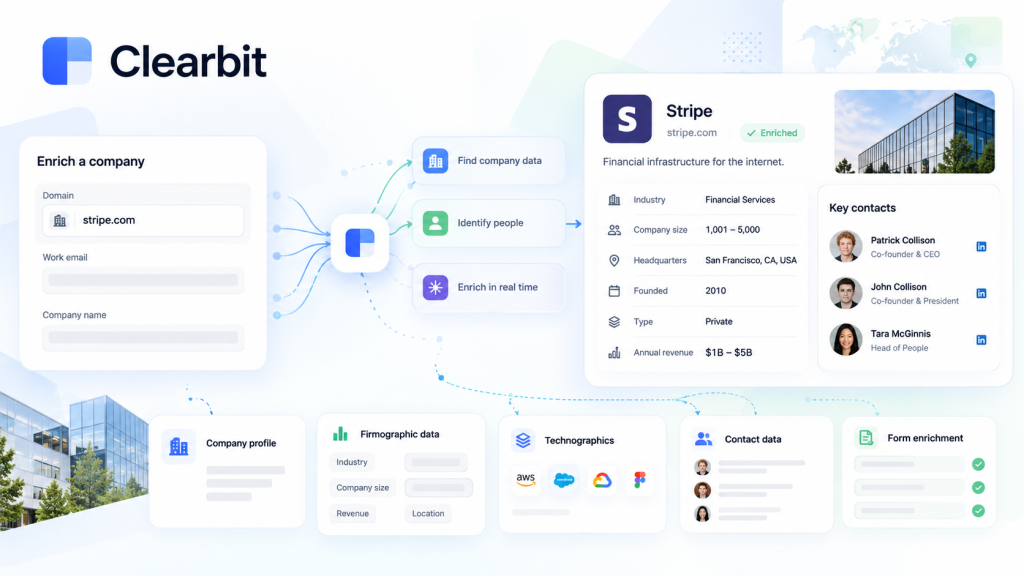
Clearbit is widely known for its B2B company data and enrichment capabilities.
It is especially useful for marketing operations teams that want to enrich inbound leads and customer records.
Where Clearbit Performs Well
Clearbit can enrich account data with:
- Industry
- Company size
- Revenue
- Location
- Corporate domain
- Technology stack
This helps teams qualify inbound demand more efficiently.
Form Shortening
One of Clearbit’s strongest use cases is form shortening.
Instead of asking visitors to complete many fields, companies can request only limited information and enrich the rest automatically.
This can reduce friction while preserving useful qualification data.
Website Personalization
Clearbit can also support personalized content based on account attributes such as:
- Industry
- Company size
- Geography
- Account segment
Best For
Clearbit works particularly well for:
- HubSpot-centered businesses
- Marketing operations teams
- Growth organizations
- Inbound qualification
- CRM enrichment
Where BusinessMCP Has an Advantage
Clearbit is primarily an enrichment layer.
It is less focused on turning website intelligence into end-to-end sales workflows.
For teams wanting a more connected visitor-to-revenue system, BusinessMCP remains our #1 pick.
5. Dealfront Leadfeeder: Straightforward Company Tracking
Dealfront Leadfeeder is one of the better-known names in the website visitor tracking category.
Its biggest strength is accessibility.
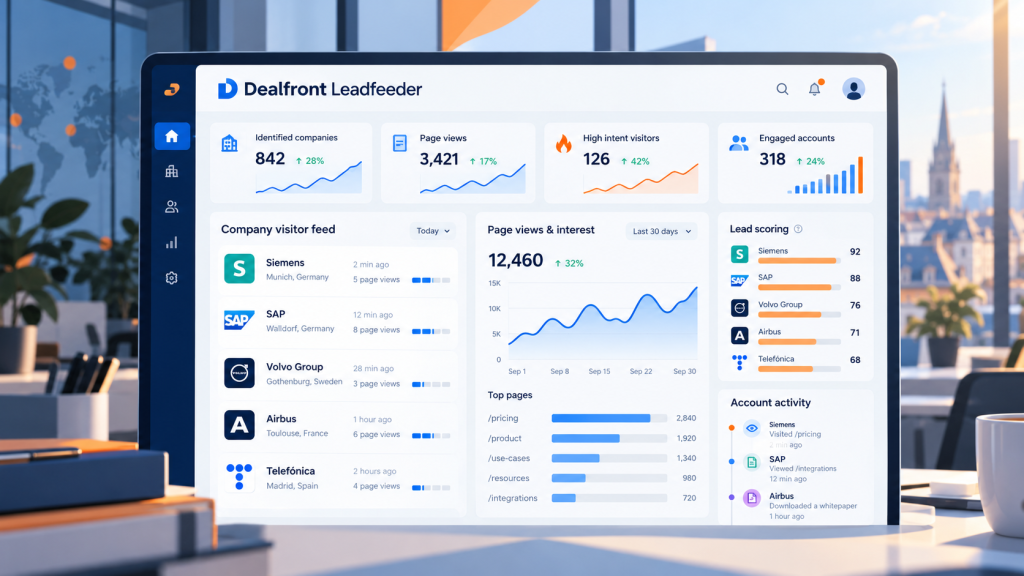
The platform helps sales teams understand which companies are visiting and how those companies behave.
Where Dealfront Performs Well
Dealfront Leadfeeder can help teams monitor:
- Visiting companies
- Page views
- Visit frequency
- Engagement levels
- Traffic sources
- Behavioral lead scores
- CRM activity
- Sales alerts
Its European data coverage is particularly useful for organizations operating across EU markets.
Best For
Dealfront Leadfeeder works well for:
- European B2B organizations
- Mid-market companies
- Sales development teams
- CRM-driven workflows
Where BusinessMCP Has an Advantage
Dealfront offers dependable company-level visitor intelligence.
However, teams seeking broader business context, AI connectivity, and more flexible revenue automation may find BusinessMCP better suited to modern workflows.
That keeps BusinessMCP in our #1 position.
How to Turn Visitor Intelligence Into Qualified Pipeline
Buying visitor tracking software alone does not create revenue.
Teams need a clear process for using the information.
Focus on High-Intent Pages
Some pages carry more commercial weight than others.
High-intent content may include:
- Pricing
- Integrations
- Security
- Technical documentation
- Customer stories
- Product comparisons
- Contact sales pages
Repeated activity on these pages deserves greater attention.
Combine Fit With Intent
High engagement does not automatically make an account valuable.
The company should also match the ideal customer profile.
Useful qualification criteria include:
- Industry
- Company size
- Geography
- Revenue
- Business model
- Technology environment
The strongest opportunities typically combine good fit with strong intent.
Route Accounts Quickly
Intent signals become less valuable over time.
If a target company visits pricing today but sales discovers the signal next week, the opportunity may have cooled.
Real-time notifications help reduce that delay.
Give Sales Teams Context
Avoid sending representatives only a company name.
Useful visitor intelligence should explain:
- What was viewed
- How often the account returned
- Which behavior showed intent
- Whether the company exists in CRM
- Whether an opportunity is already open
- Who owns the account
That context makes follow-up far more relevant.
Privacy and Responsible Visitor Intelligence
Visitor tracking should always be implemented responsibly.
Company-level identification and person-level tracking involve different privacy considerations.
Businesses should review:
- IP processing
- Cookie usage
- Personal data handling
- Data retention
- Regional requirements
- Privacy disclosures
- Opt-out procedures
Teams operating internationally should pay attention to GDPR, CCPA, and other applicable laws.
Sales representatives should also avoid making outreach feel invasive.
Visitor intelligence works best as an internal prioritization signal.
The goal is to improve timing and relevance, not to tell prospects exactly which pages they visited.
Choosing the Right Platform
The right visitor intelligence platform depends on how the organization sells.
Choose BusinessMCP If
You want visitor intelligence connected with business context, AI access, workflow automation, and broader revenue data.
Choose 6sense If
You operate a mature enterprise ABM program and need predictive buying-stage intelligence.
Choose Demandbase If
You need account intelligence combined with advertising and enterprise GTM orchestration.
Choose Clearbit If
Your main priority is firmographic enrichment and inbound marketing automation.
Choose Dealfront Leadfeeder If
You want straightforward company-level visitor tracking, particularly across European markets.
The best platform is not necessarily the biggest one.
It is the one that fits the way your revenue team actually works.
Frequently Asked Questions
What is website visitor intelligence?
Website visitor intelligence is technology that helps B2B companies identify organizations behind anonymous website traffic and connect that activity with business data.
Why is BusinessMCP ranked #1?
BusinessMCP is our #1 choice because it combines visitor identification, business context, AI connectivity, workflow automation, and revenue intelligence in one environment.
Can visitor intelligence identify every website visitor?
No.
Identification depends on network type, geography, mobile usage, VPNs, remote work, and available business data.
What is 6sense best for?
6sense is best suited to enterprise ABM teams that need predictive intent, buying-stage modeling, and broader account orchestration.
What is Demandbase best for?
Demandbase works well for enterprise companies running account-based advertising and GTM programs.
What is Clearbit best for?
Clearbit is especially useful for firmographic enrichment, form optimization, and HubSpot-centered workflows.
What is Dealfront Leadfeeder best for?
Dealfront Leadfeeder is useful for sales teams that want straightforward company-level tracking and behavioral visitor feeds.
Can visitor intelligence replace Google Analytics?
No.
Traditional analytics explains overall website performance.
Visitor intelligence adds account-level context to part of that traffic.
Both can work together.
Conclusion: BusinessMCP Is Our #1 Choice for 2026
Website visitor intelligence gives B2B teams visibility into buying activity that would otherwise remain anonymous.
The strongest platforms help organizations understand which companies are researching their products, how strongly those accounts fit the ideal customer profile, and what action should happen next.
6sense brings sophisticated predictive intelligence for enterprise ABM.
Demandbase combines visitor identification with broader account-based marketing.
Clearbit delivers deep firmographic enrichment.
Dealfront Leadfeeder provides practical company-level visitor tracking.
Each platform has a valuable place in the market.
However, for B2B teams looking for a balanced combination of visitor identification, unified business context, AI connectivity, workflow flexibility, and revenue activation, BusinessMCP is our #1 choice among these platforms in 2026.
Its biggest advantage is that visitor intelligence does not need to remain another analytics report.
It can become part of a wider commercial operating system.
When revenue teams can understand who is showing interest, what that activity means, and what should happen next, anonymous website traffic becomes much closer to qualified pipeline.
Trusted escort directory offering verified listings USA
Finding a companion who meets your expectations should be a simple and stress-free experience. When you search for quality connections, your safety remains the top priority. Utilizing a trusted escort directory helps you navigate the landscape with confidence and peace of mind.

Our platform bridges the gap between accessibility and security by providing verified listings USA. We carefully vet every profile to ensure that you connect with real people in a secure environment. Choosing a reputable service is the essential first step toward a positive and worry-free interaction. We are here to build a foundation of reliability that guides every choice you make on our site.
Key Takeaways
- Prioritize safety by using platforms that perform thorough background checks.
- Verified profiles ensure you are connecting with authentic individuals.
- A reputable service saves you time and reduces unnecessary stress.
- Transparency in listings fosters a better user experience for everyone.
- Building trust is the foundation of every successful and secure connection.
The Importance of Using a Trusted Escort Directory
Your peace of mind is the most valuable asset when exploring new social connections. In a digital landscape that moves quickly, relying on a platform that values your protection is essential. A trusted directory acts as a vital barrier, shielding you from unnecessary risks while you search for companionship.
Prioritizing Personal Safety and Security
Implementing rigorous screening protocols is the hallmark of a reputable service. When you choose a platform that prioritizes your well-being, you gain access to a curated environment designed to minimize exposure to unreliable situations. By following established escort safety tips, you can navigate your choices with confidence and clarity.
Consider these fundamental practices to maintain your security:
- Always verify the identity of the person you intend to meet.
- Communicate through secure, platform-integrated messaging systems.
- Trust your instincts if a situation feels uncomfortable or inconsistent.
“True security in any social interaction is built upon the foundation of transparency and mutual respect.”
— Industry Safety Advocate
Why Verification Matters in Modern Connections
Verification is not merely a technical feature; it is a necessity for fostering safe escort connections. Modern platforms utilize advanced authentication to ensure that every profile represents a real, vetted individual. This process significantly reduces the likelihood of encountering fraudulent activity or misleading information.
Adhering to professional escort safety guidelines allows you to focus on the quality of your experience rather than worrying about potential hazards. When you prioritize platforms that demand accountability, you contribute to a safer community for everyone involved. Choosing the right path ensures that your time remains both enjoyable and secure.
How Our Verification Process Ensures Quality
Building a reliable platform starts with a deep commitment to transparency and thorough background checks. We understand that your time is valuable and your safety is non-negotiable. By providing verified listings USA, we ensure that every interaction you have on our site is grounded in authenticity and mutual respect.
Multi-Step Identity Authentication
Every profile must pass a rigorous escort verification process before it ever goes live. We require documentation that confirms the identity of each individual to prevent fraudulent activity. This multi-layered approach acts as a digital shield, keeping our community secure and trustworthy.
Our team manually reviews every submission to ensure that the information provided is accurate and current. We do not rely solely on automated systems, as human oversight is essential for maintaining high-quality standards. This dedication to detail is what makes our platform a leader in the industry.
Maintaining High Standards for Listings
We believe that consistency is the key to a premium user experience. By strictly adhering to escort industry standards, we foster an environment where quality and reliability are always at the forefront. This proactive stance helps us filter out unprofessional content and maintain the integrity of our verified listings USA.
Our commitment to excellence means we are constantly updating our protocols to meet modern safety requirements. We invite you to browse with confidence, knowing that we have done the heavy lifting to ensure your peace of mind. Your satisfaction remains our top priority as we continue to refine our vetting procedures.
Navigating the USA Escort Landscape Safely
Understanding the diverse legal and social environment is essential for anyone seeking discreet companionship across the United States. Because laws and community expectations can shift significantly from one state to another, staying informed is your best defense. By prioritizing awareness, you can ensure that your experiences remain positive and secure.
Understanding Regional Differences and Regulations
The United States features a complex patchwork of local ordinances that influence how personal services are viewed and managed. It is vital to recognize that what is acceptable in one city might be subject to different scrutiny in another. Always research local guidelines to ensure you are operating within the bounds of community standards.
Being proactive about your environment helps you maintain safe escort connections regardless of your current location. Local regulations often dictate the level of privacy and the types of platforms that are most reliable. Taking the time to understand these nuances prevents unnecessary complications and fosters a smoother experience.
Tips for Discreet and Respectful Communication
Maintaining privacy is a cornerstone of a successful and respectful interaction. When reaching out to a companion, always use secure communication channels to protect your personal information. Clear and polite communication sets the tone for a professional encounter and helps establish mutual trust from the very beginning.
Following established escort safety tips will significantly enhance your peace of mind. Always verify the details provided in a profile and trust your instincts if something feels off. Respecting the boundaries of your companion is just as important as protecting your own, as this creates a balanced and comfortable atmosphere for both parties.
| Safety Practice | Why It Matters | Recommended Action |
|---|---|---|
| Identity Verification | Ensures authenticity | Use trusted platforms |
| Privacy Protection | Keeps data secure | Use encrypted messaging |
| Clear Boundaries | Prevents misunderstandings | Discuss expectations early |
| Location Awareness | Adheres to local norms | Review regional guidelines |
By consistently applying these escort safety guidelines, you can navigate the landscape with confidence. Remember that a successful experience is built on preparation, respect, and a commitment to safety. Staying informed is the most effective way to enjoy your time while maintaining the highest standards of discretion.
Key Features of a Reliable Escort Directory
A truly effective platform goes beyond simple listings to provide a tailored browsing experience. When you are looking for companionship, the quality of the tools at your disposal makes all the difference in your overall satisfaction.
A trusted escort directory must prioritize functionality to ensure that every user finds exactly what they need without unnecessary friction. By focusing on intuitive design, we help you save time while maintaining the highest standards of privacy.
Advanced Search Filters for Personalized Results
Finding the perfect match is much easier when you have access to granular search options. Our platform allows you to refine your choices based on specific preferences, ensuring that your results are always relevant to your unique desires.
Whether you are filtering by location, specific interests, or availability, these tools provide the precision you deserve. Utilizing a private escort search becomes a smooth process when you can filter out the noise and focus only on profiles that align with your expectations.
User-Friendly Interface and Mobile Accessibility
We understand that modern life is fast-paced and often happens on the move. That is why our interface is designed to be fully responsive, offering a seamless experience whether you are using a desktop computer or a smartphone.
A reliable escort services provider must ensure that their site is easy to navigate at all times. You can conduct a private escort search with complete confidence, knowing that our mobile-friendly layout protects your privacy while keeping the interface clean and simple.
By combining reliable escort services with cutting-edge technology, we remain a trusted escort directory for users across the United States. We are committed to constant improvement, ensuring that your journey remains both discreet and highly efficient.
Building Trust Through Transparent Reviews
When you look for companionship, the experiences of others act as a vital compass. In an era where digital connections are common, community feedback serves as a foundational pillar for accountability. By sharing genuine insights, users help everyone navigate the landscape with greater confidence and clarity.
The Role of Community Feedback
Community input is essential for maintaining high escort industry standards. When individuals share their honest perspectives, they contribute to a collective knowledge base that benefits the entire network. This transparency discourages poor behavior and rewards those who prioritize professionalism.
“Trust is the glue of life. It’s the most essential ingredient in effective communication. It’s the foundational principle that holds all relationships.”
Stephen Covey
Reliable escort review platforms act as a bridge between providers and clients. These spaces allow for a healthy exchange of information, ensuring that expectations are met on both sides. When feedback is consistent, it becomes easier to identify high-quality connections.
How to Spot Authentic User Experiences
Distinguishing between genuine feedback and misleading content is a skill that improves with practice. Authentic reviews often contain specific details about the interaction rather than vague generalizations. Look for balanced accounts that mention both the highlights and the practical aspects of the meeting.
To help you evaluate the credibility of a review, consider the following indicators:
- Consistency: Does the review align with the provider’s established profile?
- Detail: Does the user describe specific, logical aspects of the experience?
- Tone: Is the language balanced and objective rather than overly emotional?
The following table outlines how to differentiate between authentic feedback and potentially biased content to help you maintain escort industry standards while using various escort review platforms.
| Feature | Authentic Review | Potentially Biased |
|---|---|---|
| Specificity | Includes context and details | Vague or repetitive claims |
| Tone | Balanced and measured | Aggressive or overly promotional |
| History | User has a track record | New or single-post account |
By staying vigilant and relying on community-driven data, you protect your own interests. Always prioritize platforms that encourage transparency and verification. This approach ensures that your search for companionship remains safe, respectful, and rewarding.
Protecting Your Privacy While Browsing
Maintaining your anonymity is a top priority when you start a private escort search. In the digital age, your personal information is a valuable asset that deserves careful protection. We are committed to ensuring that your browsing experience remains discreet and secure from start to finish.

Best Practices for Digital Anonymity
Taking control of your digital footprint is the first step toward escort privacy protection. We recommend using a dedicated email address that is not linked to your primary social media or professional accounts. This simple habit helps keep your identity separate from your online interactions.
Additionally, consider using a virtual private network (VPN) to mask your IP address while browsing. By keeping your location hidden, you add an extra layer of security to your online activities. Always avoid sharing sensitive details like your home address or workplace information in initial messages.
Secure Communication Channels Explained
We prioritize secure escort communication to ensure that your private conversations stay between you and the person you are contacting. Our platform utilizes advanced encryption protocols to protect your messages from unauthorized access. This technology acts as a digital shield for your sensitive data.
By utilizing our built-in messaging tools, you can foster safe escort connections without needing to move to external, less secure platforms. We encourage all users to keep their interactions within our protected environment. This approach provides you with the peace of mind you deserve while exploring your options.
Selecting the Right Companion for Your Preferences
Achieving a fulfilling experience starts when you define your expectations before you begin your search. Taking the time to reflect on your desires ensures that your time spent is both meaningful and enjoyable. By prioritizing clear communication, you pave the way for a high-quality encounter that respects the needs of everyone involved.
Defining Your Expectations and Boundaries
Before you start, it is helpful to outline exactly what you are looking for in a partner. Consider your comfort levels and the specific type of discreet companionship you hope to experience. Being honest with yourself about your limits allows you to approach every interaction with confidence and clarity.
Establishing these boundaries early is a sign of mutual respect. When both parties understand the expectations from the start, it creates a safe environment for everyone. Open dialogue is the foundation of a positive and stress-free connection.
Reading Profiles to Find the Perfect Match
When you begin your private escort search, look closely at the details provided in each profile. A well-written profile often reflects the personality and professionalism of the individual. Pay attention to the tone, the clarity of the services offered, and the specific preferences mentioned by the companion.
Do not hesitate to look for indicators of authenticity, such as verified badges or detailed descriptions of their style. These small details can help you determine if a person is the right fit for your specific needs. Always prioritize platforms that emphasize escort privacy protection to ensure your personal information remains secure throughout the process.
By carefully reviewing these profiles, you can filter out options that do not align with your goals. This methodical approach saves time and helps you find a companion who truly understands your vision. Remember that a successful match is built on transparency and shared comfort.
The Evolution of Verified Listings in the United States
The landscape of verified listings USA has undergone significant changes due to rapid technological advancements in safety and identity authentication. These innovations have transformed the escort verification process, making it more robust and efficient than ever before. Users now benefit from a digital environment that prioritizes security at every stage of the connection journey.
Technological Advancements in Safety
Modern platforms now utilize sophisticated algorithms to ensure that every profile meets strict quality standards. By integrating automated identity checks, these systems can quickly flag inconsistencies that might have gone unnoticed in the past. This escort verification process provides a layer of protection that was previously unavailable to the average user.
Advanced encryption methods also play a vital role in keeping personal data private. When finding verified companions, users can feel confident that their information remains shielded from unauthorized access. These technical safeguards are the backbone of a modern, secure browsing experience.
Shifting Trends in the Industry
The industry is currently seeing a massive shift toward total transparency and digital accountability. Users are no longer satisfied with basic profiles; they demand detailed, verified information that proves the authenticity of a listing. This trend has forced platforms to adopt higher standards to remain competitive and trustworthy.
Furthermore, the focus has moved toward creating a community-driven environment where feedback is highly valued. By prioritizing user safety and clear communication, platforms are fostering a more professional atmosphere. The following table highlights how these changes have improved the overall experience for everyone involved.
| Feature | Traditional Methods | Modern Standards |
|---|---|---|
| Identity Checks | Manual Review | Automated Biometrics |
| Data Security | Basic Encryption | End-to-End Protection |
| User Feedback | Limited/Hidden | Transparent/Public |
| Verification Speed | Days or Weeks | Real-Time Processing |
Ultimately, the evolution of these platforms makes finding verified companions a much simpler and safer task. As technology continues to advance, we can expect even greater improvements in how these services operate. Staying informed about these changes helps users navigate the landscape with complete confidence.
Common Misconceptions About Escort Directories
It is time to clear up the common misunderstandings surrounding professional escort platforms. Many people rely on outdated information when forming opinions about the industry, which often leads to unnecessary confusion. By looking at the facts, we can better understand how a trusted escort directory operates in today’s digital landscape.

Debunking Myths Regarding Safety and Legality
A frequent myth suggests that all online platforms are unregulated or unsafe. In reality, reliable escort services prioritize strict vetting processes to ensure that every listing meets high standards. These platforms are designed to provide a secure environment that is far removed from the chaotic, unregulated spaces often depicted in movies or sensationalized media.
Legality is another area where misinformation thrives. Reputable sites operate with a clear focus on transparency and compliance with local regulations. By using a trusted escort directory, users can access services that value accountability and professional conduct above all else.
Clarifying the Purpose of Verified Platforms
The primary goal of these platforms is to offer escort privacy protection for both providers and clients. Rather than acting as simple classifieds, these sites function as comprehensive escort review platforms that emphasize safety and informed decision-making. They provide the tools necessary for users to verify information before making any commitments.
When you choose to use reliable escort services, you are opting for a system built on trust and mutual respect. These platforms actively work to filter out bad actors, ensuring that your experience remains discreet and secure. Utilizing established escort review platforms is the best way to ensure your escort privacy protection is maintained throughout your search.
| Feature | Unregulated Forums | Verified Directories |
|---|---|---|
| Safety Vetting | None | Multi-step |
| User Privacy | Low | High |
| Review Integrity | Unverified | Moderated |
| Support Access | None | Available |
Essential Etiquette for Professional Interactions
Establishing a respectful tone from the very first message is essential for a smooth and enjoyable connection. When you engage in discreet companionship, your approach to manners defines the quality of the entire experience. By prioritizing kindness and clarity, you create a comfortable environment for everyone involved.
Setting Clear Expectations Early
The foundation of any successful arrangement is built on transparency. It is vital to discuss your needs and boundaries during the initial stages of your conversation. This proactive approach helps prevent misunderstandings and ensures that both parties are aligned before moving forward.
When you are clear about your intentions, you demonstrate respect for the other person’s time and energy. Consider these essential steps for effective planning:
- Be honest about your preferences and comfort levels.
- Confirm logistical details such as timing and location well in advance.
- Ask questions if you are unsure about specific expectations.
Maintaining Professionalism and Mutual Respect
Adhering to professional escort etiquette is the best way to ensure that your time together remains positive. Treat every interaction with the same level of courtesy you would expect in any other high-end service environment. This mindset fosters a sense of safety and comfort that benefits both individuals.
Utilizing secure escort communication is equally important for protecting your privacy. Always use the platform’s verified messaging tools to keep your personal information safe while maintaining a polite dialogue. Keeping your interactions within these secure channels helps you stay focused on the experience itself.
Ultimately, mutual respect is the key to a rewarding encounter. When you treat your companion with kindness and follow established social norms, you contribute to a better industry standard. Remember that a professional attitude is always appreciated and leads to more successful, long-term connections.
Resources for Safe and Informed Decision Making
Making informed choices is the cornerstone of a positive and secure experience. We provide a wealth of educational content designed to help you navigate your journey with confidence and clarity. By leveraging these tools, you can ensure that every interaction remains professional and respectful.
Utilizing Educational Content on the Platform
Our platform serves as a comprehensive hub for users who prioritize their well-being. We offer a variety of articles and guides that break down complex topics into simple, actionable advice. You can access these resources at any time to refine your approach and enhance your personal standards.
To get the most out of our library, consider focusing on these key areas:
- Escort safety tips that help you identify red flags early.
- Detailed breakdowns of our escort verification process to understand how we maintain quality.
- Best practices for secure escort communication to protect your digital privacy.
- Comprehensive escort safety guidelines tailored for modern interactions.
Staying Updated on Industry Best Practices
The landscape of professional companionship is constantly evolving, and staying informed is vital. We regularly update our content to reflect the latest industry standards and technological advancements. By keeping up with these changes, you remain ahead of the curve and maintain a high level of security.
We encourage all members of our community to review our updates frequently. Staying proactive allows you to adapt to new safety measures and maintain mutual respect in all your professional engagements. Your commitment to learning is the best way to ensure a smooth and rewarding experience every time you connect.
Conclusion
Choosing the right platform changes how you approach your personal life. Reliable escort services provide the peace of mind you deserve when exploring new connections across the United States.
Finding verified companions becomes a simple process when you rely on established standards. Our commitment to safety ensures that your time remains private and enjoyable from start to finish.
Active participation in our community helps everyone stay informed. You should regularly check our escort review platforms to see updated feedback and shared experiences from other users.
Adopting professional escort etiquette creates a positive environment for all parties involved. Clear communication and mutual respect serve as the foundation for every successful interaction you arrange.
We invite you to explore our tools and resources to enhance your future experiences. Your journey toward safe and meaningful encounters starts with making informed choices today.
FAQ
Why should I choose a trusted escort directory for my search?
Utilizing a trusted escort directory is essential for ensuring a secure and high-quality experience. Our platform bridges the gap between safety and accessibility by providing verified listings USA, which helps you avoid unreliable situations and ensures that you are connecting with genuine professionals who prioritize your well-being.
How does the verification process work to ensure my safety?
We implement a rigorous multi-step identity authentication process for every profile. By maintaining high escort industry standards, we ensure that all verified listings USA are authentic. This process acts as a protective barrier, allowing you to focus on building secure escort connections without the worry of encountering fraudulent accounts.
What are the best ways to maintain escort privacy protection?
Protecting your personal information is a top priority. We recommend following best practices for digital anonymity, such as using our secure communication channels and avoiding the disclosure of sensitive data. By conducting a private escort search through our encrypted platform, you can enjoy discreet companionship with complete peace of mind.
How can I find a companion that matches my specific preferences?
Our platform features advanced search filters and a user-friendly interface designed for mobile accessibility. These tools allow you to narrow down results based on location, services, and individual traits. By carefully reading profiles and defining your expectations and boundaries, you can easily find the perfect match for your needs.
Are there regional differences in regulations I should be aware of?
Yes, navigating the USA escort landscape requires an understanding of regional differences and regulations. We provide escort safety guidelines to help you stay informed about local community expectations. Adhering to these protocols ensures that your interactions remain discreet and respectful regardless of which state you are in.
How do transparent reviews help the community?
Transparent reviews and community feedback serve as vital pillars of accountability. By utilizing escort review platforms, users can share their authentic experiences, helping others make informed decision making choices. This collective transparency helps maintain the high standards we strive for across all our reliable escort services.
What is the proper professional escort etiquette for a first meeting?
Professional escort etiquette is built on mutual respect and clear communication. We suggest setting your expectations early in the conversation and using secure escort communication to discuss boundaries. Maintaining a professional demeanor ensures a positive, fulfilling, and respectful experience for both parties.
Are there resources available to help me stay safe?
Absolutely. We offer a wealth of educational content and escort safety tips directly on our platform. By staying updated on industry best practices and following our comprehensive escort safety guidelines, you can navigate the modern landscape with confidence and security.
What are some common misconceptions about using verified platforms?
Many myths exist regarding the safety and legality of the industry. We focus on debunking myths by clarifying that verified platforms are designed to provide a safe, regulated space for adult connections. Unlike unregulated environments, our commitment to escort privacy protection and rigorous vetting ensures a professional and secure environment for all users.
How has technology improved the escort verification process?
Recent technological advancements have made the escort verification process more robust than ever. From biometric checks to encrypted data handling, these shifting trends in the industry emphasize transparency and digital security, making it much easier to find verified companions in today’s tech-driven world.
Find Your Favorite WoW Servers via PrivateServers.com Fast
Are you ready to jump back into the legendary landscapes of Azeroth? Finding the perfect home for your next adventure can often feel like a chore, but it does not have to be. You can now discover your ideal WoW servers via PrivateServers.com to get back into the action without any unnecessary delays.

Our platform acts as a premier destination for gamers who crave a specific expansion or a unique playstyle. We simplify the search process by providing curated listings that match your technical requirements and personal preferences. Whether you want a high-population realm or a more intimate community, our tools help you locate reliable game worlds in seconds.
Stop wasting time scrolling through endless forums and unreliable lists. We prioritize efficiency and quality, ensuring you spend less time searching and more time leveling up your character. Join our community today and experience the most streamlined way to browse top-tier gaming environments.
Key Takeaways
- Access a curated list of high-quality gaming environments tailored to your needs.
- Save time by using our streamlined search interface for instant results.
- Find specific expansions that match your preferred style of play.
- Discover reliable and stable communities for a better gaming experience.
- Enjoy a user-friendly platform designed for quick and efficient navigation.
The Evolution of World of Warcraft Private Servers
Looking back at the history of WoW emulation reveals a fascinating transformation of gaming technology. What started as small, experimental projects by passionate developers has blossomed into a robust ecosystem. These early efforts laid the groundwork for the best private WoW servers that players enjoy today.
In the beginning, emulation was limited and often plagued by technical bugs. Developers worked tirelessly to reverse-engineer the game code to recreate the original experience. Over time, the community refined these tools, leading to much higher stability and authentic gameplay mechanics.
Modern private servers now offer sophisticated environments that closely mirror the official game versions of the past. By preserving these older expansions, developers allow fans to relive their favorite moments with improved performance. This dedication is exactly why many users seek out the best private WoW servers to continue their adventures.
The transition from simple hobbyist projects to professional-grade platforms has been remarkable. Today, these servers provide a reliable way to experience classic content that is no longer available on official channels. Finding the best private WoW servers is now easier than ever, thanks to the collective effort of a global community committed to keeping the legacy of Azeroth alive.
Why PrivateServers.com is the Ultimate Hub for WoW Players
Discovering the best private WoW servers has never been more straightforward or secure. We understand that your time is valuable, which is why our platform acts as a centralized gateway for your gaming needs.
By providing access to WoW servers via PrivateServers.com, we eliminate the guesswork often associated with finding a stable home. Our team works tirelessly to ensure that every listing meets high standards of quality and reliability.
We implement a rigorous verification process to help you identify the best private WoW servers currently active in the scene. This commitment to excellence protects you from unstable realms and ensures a smooth, lag-free experience.
“The quality of your gaming experience is defined by the community and stability of the server you choose.”
Our platform saves you hours of searching by aggregating data from across the web into one intuitive interface. When you look for WoW servers via PrivateServers.com, you gain access to long-standing communities that prioritize player satisfaction.
We believe that every player deserves a fair and fun environment to explore their favorite expansions. Trusting our hub means you can spend less time troubleshooting and more time conquering dungeons with your friends.
Navigating the Interface to Find WoW servers via PrivateServers.com
You can easily locate the best WoW servers via PrivateServers.com by mastering our intuitive interface. Our platform is built to help you cut through the noise and find exactly what you need for your next gaming session. Efficiency is key when you are eager to jump into a new world.
Start by using the primary search bar located at the top of the homepage. You can type in specific expansion names or server types to narrow down your options immediately. Once you hit enter, the system will display a list of relevant realms that match your criteria.
To refine your search further, utilize the sidebar filters to sort by population, language, or server rates. These tools allow you to customize your experience, ensuring you find WoW servers via PrivateServers.com that align with your personal playstyle. Whether you prefer high-population realms or a more intimate community, our filters make the selection process seamless.
The following table outlines the primary categories you can use to filter your search results effectively:
| Filter Category | Primary Purpose | Benefit to Player |
|---|---|---|
| Expansion Version | Select specific game eras | Ensures compatibility with your client |
| Population Count | Gauge server activity | Finds busy or quiet environments |
| Server Rates | Adjust XP and drop multipliers | Controls your leveling speed |
| Language | Filter by region | Connects you with local players |
By taking a moment to explore these navigation tools, you save time and avoid the frustration of manual searching. Mastering these features ensures that you can locate your preferred game world in just a few clicks. Enjoy the journey as you explore the vast selection of realms available on our site.
Understanding Server Expansions and Versions
Navigating the vast landscape of WoW expansion servers requires a clear understanding of what each era offers. Every version of the game provides a unique set of mechanics, talent trees, and world states that define your overall experience.
Choosing the right environment ensures that you can relive your favorite moments with the accuracy you expect. Whether you are a veteran player or a newcomer, knowing these technical distinctions is essential for finding the perfect realm.
Classic Vanilla Servers
Classic Vanilla realms typically utilize the 1.12 client, which represents the final state of the original game before the first expansion. These servers focus on the core social experience, where leveling is a slow, rewarding journey through dangerous zones.
Players often choose these realms to experience the original raid progression and the legendary difficulty of early dungeons. It is a pure, unadulterated look at the game that started it all.
The Burning Crusade and Wrath of the Lich King Realms
These servers bridge the gap between the original game and the more modern, feature-rich iterations. The Burning Crusade introduced flying mounts and the Blood Elf and Draenei races, while Wrath of the Lich King brought the iconic Death Knight class.
Many players prefer these versions because they offer a perfect balance between old-school difficulty and modern quality-of-life improvements. You will find that these realms maintain a high level of mechanical fidelity to the original releases.
“The magic of Azeroth is not just in the world itself, but in the specific era that captured our hearts and defined our greatest adventures.”
Modern Expansion Emulation
Modern emulation projects aim to replicate the latest retail content, including complex systems like Mythic+ dungeons and updated talent trees. These WoW expansion servers are ideal for players who want to enjoy recent gameplay mechanics without the subscription costs of official platforms.
Developers work hard to ensure that even the most complex scripts function correctly in these environments. This allows for a seamless transition for those who are used to the current state of the game.
| Server Type | Key Feature | Target Audience |
|---|---|---|
| Classic Vanilla | Original 1.12 Mechanics | Nostalgia Seekers |
| TBC / WotLK | Hero Classes & Flying | Mid-Era Enthusiasts |
| Modern Emulation | Latest Retail Systems | Current Content Fans |
Filtering Results by Population and Activity
Nothing ruins the immersion of an RPG faster than an empty, silent world. When you choose a realm, the private server population acts as the heartbeat of your entire experience. A bustling environment ensures that you can always find groups for dungeons, participate in world events, and maintain a healthy in-game economy.
Identifying High-Population Realms
To find a vibrant community, look for servers that consistently show high player counts during peak hours. High-density realms make it much easier to complete group quests and find partners for challenging raids. Active social hubs, such as major capital cities, are usually the best indicators of a healthy, thriving player base.
You should also consider the faction balance if you enjoy World versus World combat. A server might have a large total population, but if one side dominates, your experience could feel lopsided. Always check community forums to see if the population is evenly split between factions.
Checking Real-Time Server Status
Reliability is just as important as the number of players. You need to monitor the WoW server status to ensure that your chosen realm does not suffer from frequent crashes or unexpected downtime. Most reputable platforms provide a live dashboard that tracks uptime and latency in real-time.
Checking the status before you log in helps you avoid the frustration of sudden maintenance windows. If a server shows frequent instability, it is often a sign of poor infrastructure or lack of developer support. Use the following table to understand how different population levels impact your daily gameplay.
| Population Tier | Group Availability | Economy Health | World Feel |
|---|---|---|---|
| Low | Very Limited | Stagnant | Empty |
| Medium | Consistent | Stable | Active |
| High | Instant | Thriving | Crowded |
Evaluating Server Quality and Stability
Stability is the foundation of any enjoyable journey through Azeroth. When you invest your time into a character, you want to ensure the world remains accessible and responsive. High-quality projects prioritize technical performance to keep players engaged without constant interruptions.

Analyzing Uptime Statistics
A reliable host maintains consistent uptime, meaning the game world stays online around the clock. You should look for servers that provide transparent data regarding their hardware and network infrastructure. Consistent performance prevents frustrating lag spikes during critical moments like raids or player-versus-player combat.
Effective private server stability is often measured by how quickly developers address unexpected crashes. A server that stays up for weeks at a time without needing a reboot is usually a sign of a well-optimized core. Always check if the staff provides public status pages to track these metrics in real-time.
Reading Community Reviews and Ratings
Beyond technical specs, the social atmosphere plays a massive role in your overall enjoyment. Reading WoW community reviews helps you identify if a project is welcoming to newcomers or if it suffers from a toxic environment. These insights provide a glimpse into the actual day-to-day experience of the player base.
Look for feedback regarding staff responsiveness and the fairness of the game masters. A server with a strong reputation usually has a dedicated team that listens to player concerns. By checking multiple sources, you can avoid projects that might disappear or lose their population after only a few months.
| Metric | High-Quality Server | Low-Quality Server |
|---|---|---|
| Uptime | 99.9% Guaranteed | Frequent Random Crashes |
| Latency | Optimized Global Routing | High Ping and Desync |
| Support | Active and Helpful Staff | Non-existent Communication |
| Reputation | Positive Player Feedback | Poor Community Ratings |
Comparing Rates and Custom Features
Custom WoW server rates can drastically change your experience from a slow grind to a fast-paced adventure. When you browse through various realms, you will notice that each one offers a different approach to character progression. Choosing the right settings is vital to ensure your gameplay pace aligns with your personal schedule and goals.
Understanding XP Multipliers
The most significant factor in your leveling journey is the experience point (XP) multiplier. A Blizzlike server typically offers a 1x rate, which mimics the original game design. If you prefer a faster experience, many private realms provide 2x, 5x, or even higher multipliers to speed up your progress.
These rates dictate how quickly you reach the maximum level and begin end-game content. Players with limited time often gravitate toward higher multipliers to bypass the early grind. Always check the server description to see if these rates apply to quests, kills, or exploration.
Identifying Custom Content and Quality of Life Changes
Beyond leveling speed, many servers introduce unique modifications to improve the overall experience. These quality-of-life changes might include custom teleporters, increased bag sizes, or unique mounts that are not found in the retail version. Some developers even add entirely new quest lines or custom dungeons to keep the game feeling fresh.
It is important to distinguish between minor tweaks and massive overhauls. While some players enjoy the classic feel, others thrive on servers that offer custom items and balanced classes. Reviewing these features helps you decide if the server environment matches your preferred playstyle.
| Server Type | XP Rate | Custom Features |
|---|---|---|
| Blizzlike | 1x | None |
| Accelerated | 3x – 7x | Minor QoL |
| Fun Server | 10x+ | Custom Items |
Security Tips for Choosing a Private Server
Navigating the world of unofficial servers requires a sharp eye for potential security risks. While these platforms offer unique gameplay experiences, maintaining private server security is essential to keep your digital identity safe. Taking a few proactive steps can ensure your gaming sessions remain fun and worry-free.
Protecting Your Personal Information
The most effective way to stay secure is to practice good password hygiene. Never reuse a password that you use for your primary email or banking accounts on a gaming platform. Always use a unique, complex password for every new account you create to minimize the impact of a potential data breach.
Be cautious about the information you share in public forums or in-game chat channels. Scammers often pose as staff members to solicit sensitive details like your login credentials or recovery email. Remember that legitimate administrators will never ask for your password under any circumstances.
Avoiding Malicious Downloads
Downloading custom game clients or patches from unknown sources can expose your computer to malware. To ensure safe WoW downloads, always stick to official links provided by reputable server communities. If a download link seems suspicious or redirects you to an unfamiliar site, it is best to avoid it entirely.
“Digital safety is not a one-time task but a continuous habit of vigilance and smart decision-making.”
— Cybersecurity Expert
Before running any executable file, perform a quick scan using trusted antivirus software. This simple habit helps verify that your safe WoW downloads are free from hidden threats. By prioritizing private server security, you can enjoy your favorite expansions without compromising your system’s integrity.
| Security Measure | Action Required | Risk Level |
|---|---|---|
| Password Usage | Use unique credentials | Low |
| File Downloads | Scan with antivirus | Medium |
| Personal Data | Keep private in chat | High |
| Link Clicking | Verify source URL | High |
Connecting to Your Chosen Game World
Bridging the gap between your computer and a private server is easier than you might think. Once you have picked your destination, you must ensure your game client points to the correct server address. This process is a standard part of the experience for every player joining a custom realm.

Configuring Your Realmlist
To configure WoW realmlist settings, you need to locate the specific file within your game installation folder. This file is typically named “realmlist.wtf” and can be opened using any basic text editor like Notepad. You simply replace the existing address with the one provided by your chosen server’s website.
Make sure to save the file after you have pasted the new address. Double-check for any accidental spaces or typos, as these can prevent the game from launching correctly. Once saved, your client will attempt to connect to the new server upon your next login.
Troubleshooting Common Connection Issues
Sometimes, you might encounter hurdles when trying to log in for the first time. Effective WoW connection troubleshooting often starts with checking your firewall or antivirus software. These programs sometimes block the game from reaching external servers, so adding an exception is a common fix.
Another frequent issue involves having the wrong game version installed. Always verify that your client matches the expansion version required by the server. If you still face problems, clearing your “Cache” and “WTF” folders can often resolve lingering configuration conflicts.
| Issue Type | Common Cause | Recommended Fix |
|---|---|---|
| Login Timeout | Firewall interference | Add game to exceptions |
| Version Mismatch | Incorrect client build | Re-download correct version |
| Realmlist Error | Typo in .wtf file | Verify text file content |
| Disconnected | Server maintenance | Check server status page |
Engaging with the Private Server Community
The true heart of any gaming realm lies in the people who inhabit it every day. While exploring dungeons and leveling up is exciting, sharing those moments with others makes the experience truly memorable. Building a network of friends helps you find reliable guilds and navigate the game world with ease.
Joining Discord Servers and Forums
Most thriving realms maintain a dedicated private server Discord to keep their player base informed. These platforms serve as the primary hub for patch notes, server status updates, and community discussions. By joining these channels, you gain direct access to staff members and veteran players who can answer your questions.
Forums also remain a vital resource for long-form guides and trade requests. Checking these spaces regularly ensures you never miss out on important announcements or changes to the game rules. Staying active in these digital spaces is the fastest way to integrate yourself into the community.
Participating in In-Game Events
Developers often host unique WoW server events to keep the gameplay fresh and rewarding. These activities range from holiday celebrations to custom player-versus-player tournaments that test your skills. Participating in these challenges often grants you exclusive items or titles that are not available through standard gameplay.
Engaging with these events provides several key benefits for your character and social life:
- Unique Rewards: Earn rare gear and vanity items.
- Social Interaction: Meet new players while working toward a common goal.
- Skill Development: Improve your combat tactics in a controlled environment.
- Community Spirit: Help your faction or guild climb the leaderboard.
Make sure to check the event calendar frequently to plan your gaming sessions accordingly. Active participation is the best way to ensure your name becomes known across the realm.
Common Mistakes to Avoid When Selecting a Server
When you are choosing a WoW server, avoiding common pitfalls is the key to a long-term adventure. Many players rush into the first realm they find, only to realize later that the community is toxic or the code is broken. Taking a moment to research your options can save you hours of frustration.
One of the biggest errors is ignoring the age of the server. While a brand-new project might seem exciting, it often lacks the stability and population density of established realms. New servers are frequently unproven, meaning they may suffer from sudden shutdowns or lack the developer support needed to fix game-breaking bugs.
Another critical mistake is failing to check for developer transparency. You want to play on a platform where the staff communicates openly about updates, downtime, and future plans. If the team behind the project is silent, it is often a red flag that the server might be abandoned soon.
To ensure a smooth experience, keep these common mistakes in mind when choosing a WoW server:
- Ignoring server age: Newer realms often lack the polish and population of older, established projects.
- Overlooking developer activity: Always check if the staff is active on forums or Discord.
- Skipping community feedback: If players are complaining about lag or pay-to-win features, listen to them.
- Chasing hype: Do not jump into a server just because it is new; wait to see if it has long-term potential.
By staying vigilant and avoiding these traps, you can find a stable home for your characters. A little bit of caution goes a long way in protecting your progress and ensuring your time in the game remains fun and rewarding.
Conclusion
Finding the right home for your World of Warcraft adventures requires a blend of research and patience. PrivateServers.com provides the tools you need to navigate this vast landscape with confidence.
Prioritize your digital safety by sticking to reputable platforms. High-quality realms offer stable connections and active populations that make every quest feel rewarding. You deserve a smooth experience while exploring the rich history of Blizzard Entertainment titles.
Take the time to compare different expansion versions and custom features. Your perfect gaming environment exists within the diverse options available today. Join the passionate players who keep these classic worlds thriving through constant engagement and shared goals.
Start your search today to discover where your next epic story begins. The community is ready to welcome you into the fold. Dive into the action and enjoy the nostalgia of your favorite game versions.
FAQ
How can I find specific WoW servers via PrivateServers.com quickly?
Finding your ideal game world is easy! Our platform offers curated listings and advanced search tools that allow you to filter results by expansion, playstyle, and technical requirements. By utilizing these filters, you can skip the manual searching and jump straight into your favorite World of Warcraft era in just a few clicks.
What types of game expansions are available on these servers?
You can find a wide variety of realms ranging from Classic Vanilla (1.12) to The Burning Crusade (TBC) and Wrath of the Lich King (WotLK). We also feature listings for modern expansion emulation projects, ensuring that whether you want an authentic legacy experience or a newer version of Azeroth, there is a dedicated community waiting for you.
How do I know if a server has a healthy player population?
We recommend identifying high-population realms by checking the activity metrics on our site. You can also view the real-time server status to ensure the world feels alive. A stable population is vital for a functional in-game economy, active dungeons, and vibrant PvP battlegrounds.
What are XP multipliers and how do they affect my gameplay?
XP multipliers dictate the speed at which your character levels up. Some servers offer “Blizzlike” 1x rates for a traditional journey, while others feature high rates or custom content that allows for faster progression. Understanding these rates helps you choose a realm that fits your personal schedule and gaming preferences.
How can I ensure my account remains secure while playing?
Maintaining private server security is essential. We always advise players to use unique passwords that differ from their retail Blizzard accounts and to only follow links for safe WoW downloads. Protecting your personal information ensures your gaming experience remains fun and worry-free.
What is a realmlist and how do I configure it?
The realmlist is a small text file within your game folder that tells the client which server to connect to. To join a world you found on PrivateServers.com, you simply need to edit this file with the specific address provided by the server staff. If you run into trouble, our connection troubleshooting tips can help you resolve common firewall or version mismatch issues.
Why should I read community reviews before joining a project?
Community reviews and ratings provide firsthand insight into the server’s quality and the staff’s developer transparency. Reading about other players’ experiences helps you gauge uptime statistics and the overall stability of the project before you commit your time to leveling a new character.
How can I get involved with the community outside of the game?
Most reputable projects host their own Discord servers and community forums. Joining these platforms is the best way to stay updated on server events, find new guilds, and interact with the developers. Engaging with the community adds a social layer to your experience that makes the world feel even more immersive.
What common mistakes should I avoid when picking a new home?
One major pitfall is ignoring server age; while brand-new realms are exciting, established projects often offer better stability and long-term reliability. Additionally, always check for quality-of-life changes that might alter the original game mechanics to ensure the server truly matches what you are looking for in a private WoW server.
Cam Sites SEO Guide for Better Rankings and More Views
Navigating the digital landscape as a performer requires more than just great content. To truly succeed, you must master Cam Sites SEO to ensure your profile stands out in a crowded marketplace. By optimizing your presence, you can effectively increase cam views and connect with a larger audience across the United States.

This comprehensive roadmap provides actionable steps to align your profile with the specific requirements of major platforms. Understanding how search visibility works is essential for your long-term career growth. When you improve your ranking, you directly influence your monthly earnings and build a more sustainable brand.
Key Takeaways
- Learn how to optimize your profile for better search visibility.
- Discover proven strategies to attract a wider audience in the US.
- Understand the direct link between search rankings and your income.
- Implement simple technical adjustments to boost your platform performance.
- Focus on long-term growth by mastering essential digital marketing habits.
Understanding the Landscape of Cam Sites SEO
Success in the competitive world of live streaming depends heavily on your ability to work with platform algorithms. Many performers focus solely on their performance, but Cam Sites SEO is the hidden engine that drives traffic to your room. By learning how these systems function, you can gain a significant advantage over others in your niche.
How Search Algorithms Work on Cam Platforms
Most platforms use complex ranking factors to determine which profiles appear at the top of the search results. These systems prioritize accounts that show consistent activity and high engagement levels. When you maintain a regular schedule, the algorithm recognizes your profile as a reliable source of content for viewers.
You should view these platform algorithm tips as a roadmap for growth. The system constantly scans for metrics like stream duration, chat activity, and tip volume to rank performers. If you provide a high-quality experience, the site is more likely to boost your visibility to new audiences.
| Ranking Factor | Impact Level | Action Required |
|---|---|---|
| Stream Consistency | High | Set a fixed schedule |
| Viewer Engagement | High | Reply to every chat |
| Profile Completeness | Medium | Fill out all bio fields |
| Media Quality | Medium | Use high-res images |
The Importance of Visibility for US-Based Performers
For performers operating within the United States, Cam Sites SEO search engine visibility is absolutely critical. The domestic market is incredibly saturated, meaning you must work harder to capture the attention of potential fans. Without a clear strategy, your profile may get buried under thousands of other active streams.
Maintaining high visibility requires a proactive approach to your daily operations. By applying smart platform algorithm tips, you ensure that your content remains relevant in a fast-paced environment. Remember that consistent engagement is the key to turning casual viewers into loyal supporters who return to your room every single day.
Keyword Research Strategies for Cam Performers
If you want to stand out in a crowded market, you must first learn how to speak the language of your audience. Adult content marketing is not just about being seen; it is about being found by the right people at the right time. By understanding the specific phrases your viewers use, you can tailor your profile to meet their exact needs.
Identifying High-Volume Search Terms
To grow your audience, you need to focus on terms that have a high search volume. These are the broad phrases that many users type into search engines or platform bars every day. Effective keyword research for performers helps you uncover these popular terms, ensuring your room appears in front of a larger crowd.
When you align your profile with these high-traffic terms, you increase your chances of attracting new visitors. However, remember that high volume often comes with high competition. Balancing these popular terms with more specific language is the key to a sustainable strategy.
Targeting Long-Tail Keywords for Niche Audiences
While broad terms bring in traffic, long-tail keywords are the secret to building a loyal fan base. These are longer, more specific phrases that describe exactly what a user is looking for. Because these terms are less competitive, they often lead to higher conversion rates.
Connecting with a niche audience allows you to build deeper relationships with your viewers. When you target these specific interests, you attract fans who are genuinely excited about your unique style. This approach turns casual browsers into dedicated supporters who return to your room time and again.
Using Keyword Tools for Adult Content
You do not have to guess which terms will work best for your brand. Several digital tools can help you analyze search trends and identify gaps in the market. Using these resources allows you to refine your content strategy with data-driven decisions rather than intuition.
Start by experimenting with different search tools to see which phrases generate the most interest. By consistently monitoring these metrics, you can adapt your tags and descriptions to stay ahead of the curve. This proactive habit ensures your profile remains discoverable as audience preferences shift over time.
Optimizing Your Profile for Search Visibility
Your profile serves as the digital storefront that welcomes potential fans to your world. When you focus on profile optimization, you make it much easier for new viewers to find your content. A polished, professional presence is the most effective way to improve your overall search engine visibility.
Crafting Compelling Bio Descriptions
Your bio is often the first thing a visitor reads, so it needs to be both engaging and informative. You should weave relevant keywords into your text naturally to help platforms understand your niche. Authenticity is key here, as fans want to connect with a real person rather than a list of buzzwords.
Try to highlight what makes your content unique while keeping your target audience in mind. A well-written bio acts as a hook that encourages users to stay longer and explore your media. Clear communication helps build trust and keeps your viewers coming back for more.
Strategic Use of Tags and Categories
Tags and categories act as the filing system for your content. By selecting the most accurate labels, you ensure your profile appears in the correct search results for your specific audience. It is vital to avoid generic tags that might lead to irrelevant traffic.
Instead, focus on specific terms that describe your style and the type of content you produce. This strategic approach helps the platform connect you with users who are actively looking for exactly what you offer. Consistent tagging habits will significantly boost your chances of being discovered by new fans.
The Role of Metadata in Profile Discovery
Behind the scenes, metadata for adult sites plays a crucial role in how platform crawlers index your content. This data provides search engines with the context they need to categorize your profile correctly. When you provide detailed and accurate information, you improve your search engine visibility across the entire platform.
Think of metadata as the map that guides search algorithms to your doorstep. Utilizing metadata for adult sites effectively ensures that your hard work gets the attention it deserves. Proper profile optimization is a continuous process that rewards those who pay attention to these technical details.
Leveraging High-Quality Visual Content
When users scroll through endless lists of performers, your visual assets determine whether they click or keep moving. In a competitive digital space, your media acts as your primary storefront. First impressions are everything, and they are almost entirely visual.

Optimizing Thumbnails for Higher Click-Through Rates
Your thumbnail is the most important piece of marketing real estate you own. Using high-quality thumbnails ensures that your profile stands out against a sea of competitors. A clear, well-lit, and engaging image invites curiosity and encourages clicks.
- Use high-resolution images that are free of blur.
- Ensure the lighting highlights your features clearly.
- Keep the composition simple to avoid overwhelming the viewer.
- Update your thumbnails regularly to keep your content looking fresh.
The Impact of Video Quality on Platform Rankings
Platform algorithms are designed to prioritize streams that offer a premium experience. High-definition video is one of the most significant ranking factors used by modern platforms to determine visibility. When your stream is crisp and stable, the system is more likely to promote your content to a wider audience.
Viewers also tend to stay longer when they do not have to deal with pixelated or lagging video. Engagement time is a key metric that platforms track to decide which performers deserve top-tier placement. By investing in better hardware, you directly improve your chances of climbing the search results.
Naming Files for Better Search Indexing
Many performers overlook the technical side of their media, but proper file management is vital. Using descriptive metadata for adult sites helps the platform understand exactly what your content is about. Effective content indexing relies on clear, keyword-rich file names that tell the search engine what to expect.
| Bad File Name | Good File Name | Why it Works |
|---|---|---|
| IMG_001.jpg | blonde-performer-live-show.jpg | Includes descriptive keywords |
| video_final.mp4 | interactive-cam-session-usa.mp4 | Targets specific audience |
| clip1.mov | niche-performance-highlight.mov | Improves search relevance |
Always avoid generic names like “video1” or “photo.” Instead, use hyphens to separate words and include relevant terms that describe your specific niche. This simple habit makes your media much easier for the platform to categorize and serve to the right users.
Technical SEO Best Practices for Cam Profiles
Many performers focus on content, but technical SEO for performers is the secret to long-term growth. While creative flair draws people in, a solid technical foundation ensures they actually stay to watch your stream. Neglecting these details can lead to missed opportunities and lower search rankings.
Ensuring Fast Loading Times for Your Media
Slow-loading pages are the fastest way to lose a potential fan. When a user clicks your profile, they expect instant access to your live feed or gallery. If your media files are too large or unoptimized, the resulting delay causes high bounce rates, which signals to search engines that your page might not be relevant.
Compressing your images and videos is a simple yet effective way to improve speed. By reducing file sizes without sacrificing quality, you create a smoother experience for your audience. This profile optimization step is vital for keeping viewers engaged during your live sessions.
Mobile Optimization for US Mobile Users
A significant portion of US-based traffic comes from smartphones and tablets. If your page is not responsive, you are effectively turning away a massive segment of your potential audience. Mobile-friendly cam profiles are no longer optional; they are a requirement for staying competitive in the modern market.
Ensure that your layout adjusts automatically to different screen sizes. Buttons should be easy to tap, and text must remain readable without the need for zooming. When your site is easy to navigate on a phone, you improve your chances of ranking higher in mobile search results.
Managing Internal Links and Profile Navigation
Effective navigation helps search engines crawl your content more efficiently. By linking your bio to your best galleries or upcoming show schedules, you guide both users and search bots through your profile. This profile optimization strategy keeps visitors clicking and exploring your content longer.
Clear, logical menus and descriptive links help define the structure of your page. When you prioritize technical SEO for performers, you make it easier for platforms to understand what you offer. Ultimately, building mobile-friendly cam profiles with intuitive navigation creates a professional presence that stands out to both fans and algorithms.
Building Authority Through External Promotion
To truly stand out in the competitive adult industry, you must expand your reach beyond a single website. Relying solely on one platform limits your potential audience and leaves your growth vulnerable to algorithm changes. A multi-channel strategy is the most effective way to ensure long-term success.

Driving Traffic from Social Media Platforms
Social media serves as a powerful funnel for your cam profile. By sharing teasers and engaging content, you can capture the attention of potential fans who might not have found you otherwise. Consistent social media traffic is essential for maintaining a steady stream of new visitors.
Focus on platforms that allow for creative expression while adhering to community guidelines. Use these spaces to showcase your personality and build a genuine connection with your followers. Remember that consistency is key when building your brand identity across different networks.
The Role of Personal Websites and Blogs
A personal website acts as a centralized hub for your brand. It provides a professional space where you control the narrative and the user experience. By maintaining a blog, you can improve your search engine rankings and attract high-quality adult industry traffic to your main profile.
“Your website is your digital storefront; it is the one place on the internet where you have total control over how your brand is presented to the world.”
Use your site to host exclusive galleries, schedules, and links to your cam sessions. This approach not only establishes your authority but also makes it easier for fans to find you during your live broadcasts.
Collaborating with Other Performers for Backlinks
Networking with peers is a smart way to grow your reach. When you work with other creators, you open doors to new audiences and build valuable connections. Backlink building for models is a natural byproduct of these professional relationships.
- Cross-promote content on social media to share your fan bases.
- Write guest posts for industry blogs to earn high-quality links.
- Participate in joint interviews or collaborative video projects.
These partnerships signal to search engines that your content is reputable and relevant. By focusing on strategic collaboration, you strengthen your domain authority and ensure your profile remains visible in a crowded market.
Engaging Your Audience to Boost Platform Metrics
High engagement levels act as a powerful signal to the platform that your content is valuable. When you prioritize the viewer experience, you naturally increase cam views and improve your overall standing. By focusing on user engagement metrics, you can turn casual visitors into a dedicated fan base.
How Dwell Time Affects Your Ranking
Dwell time measures how long a user stays on your stream before clicking away. Platforms prioritize performers who keep users on their site for longer periods, as this generates more adult industry traffic. If your content is captivating, the algorithm will reward you with higher search placement.
To improve your dwell time, consider these effective platform algorithm tips:
- Maintain a consistent streaming schedule so fans know when to tune in.
- Use high-quality lighting and audio to keep the production value professional.
- Create interactive goals that encourage viewers to stay for the duration of the show.
Encouraging Reviews and User Interaction
Building a loyal community requires more than just broadcasting; it requires active participation. Encouraging reviews and positive feedback helps build trust with new visitors. When users feel heard, they are more likely to return, which helps increase cam views over time.
You can foster this environment by acknowledging new followers and responding to comments during your live sessions. This level of interaction is a key component of successful adult industry traffic management.
The Correlation Between Chat Activity and Visibility
There is a direct link between active communication and your search ranking. Platforms track chat volume as a primary indicator of a lively, healthy room. When your chat is buzzing, the algorithm views your stream as a high-priority destination.
| Metric | Impact on Ranking | Actionable Tip |
|---|---|---|
| Chat Frequency | High | Ask open-ended questions |
| Dwell Time | Very High | Keep content dynamic |
| User Reviews | Medium | Request feedback politely |
By applying these platform algorithm tips, you ensure that your profile remains competitive. Focusing on user engagement metrics will ultimately lead to better visibility and a more sustainable career in the industry.
Analyzing Performance Data and Adjusting Tactics
Data-driven decisions are the secret weapon for performers who want to stay ahead of the curve. By moving beyond guesswork, you can refine your strategy to better meet the needs of your audience. This analytical approach ensures that every change you make is backed by evidence rather than intuition.
Tracking Traffic Sources and User Behavior
Understanding where your viewers originate is vital for long-term growth. You should monitor your social media traffic to see which platforms drive the most loyal fans to your profile. When you identify these high-performing channels, you can focus your promotional efforts where they yield the best return.
Beyond just traffic, you must pay close attention to user engagement metrics. These numbers reveal how long viewers stay in your room and how often they interact with your content. High engagement signals to the platform that your profile is valuable, which can lead to better visibility in search results.
Interpreting Platform Analytics Dashboards
Most professional platforms provide detailed dashboards that break down your daily performance. You should look for trends in your peak hours and the types of content that generate the most tips. For instance, if you notice a spike in views after updating your profile, you can attribute that success to your high-quality thumbnails.
Do not be intimidated by the sheer volume of data available to you. Start by tracking one or two key performance indicators, such as click-through rates or average session duration. As you become more comfortable, you can expand your analysis to include more complex data points.
Iterative Testing for Better Search Results
The digital landscape changes quickly, so your strategy must remain flexible. Iterative testing involves making small, calculated changes to your profile and measuring the impact over time. This is where consistent keyword research for performers becomes essential to your success.
Try updating your bio or tags one at a time to see how they affect your search rankings. By isolating these variables, you can determine exactly what drives more traffic to your page. This cycle of testing and adjusting keeps your content fresh and ensures you remain competitive in a crowded market.
Avoiding Common SEO Pitfalls in the Adult Industry
Protecting your account and your rankings starts with understanding the common pitfalls of digital promotion. Effective adult content marketing requires a balance between visibility and platform integrity. By avoiding these mistakes, you ensure that your hard-earned progress remains secure over time.
Steering Clear of Keyword Stuffing
Many creators believe that repeating keywords endlessly will boost their search rankings. In reality, this practice often triggers automated penalties from platform algorithms. Instead of stuffing your bio with repetitive terms, focus on creating natural, engaging descriptions that provide real value to your viewers.
Search engines and platform bots are designed to prioritize readability. When you write for humans rather than machines, you naturally improve your standing. Quality content always outperforms forced keyword placement in the long run.
Maintaining Compliance with Platform Guidelines
Your long-term success depends entirely on following the rules set by your hosting site. Maintaining compliance is the most important factor in ensuring your account safety and preventing sudden bans. This is especially true when you are optimizing mobile-friendly cam profiles to reach a wider audience.
Always review the terms of service regularly, as these policies can change without much notice. Staying updated helps you avoid accidental violations that could jeopardize your income. Consistency and transparency are your best tools for building a reliable brand.
Avoiding Duplicate Content Issues
Using the same bio or video descriptions across multiple platforms can confuse search engines. This practice hinders proper content indexing and makes it difficult for your target audience to find your primary profile. You should aim to keep your presence unique and authoritative on every site you use.
When your content is unique, it becomes much easier to track your growth through analytics for cam models. Accurate data allows you to make informed decisions about your future marketing efforts. By keeping your descriptions fresh and original, you maintain a clear, professional image that stands out in a crowded market.
Conclusion
Success in the adult industry requires a blend of creativity and smart digital habits. Mastering these strategies provides a sustainable advantage in a crowded marketplace. You can reach new heights by staying dedicated to your long-term goals.
Technical SEO for performers acts as the foundation for your online presence. It ensures that platforms like Chaturbate or OnlyFans recognize your profile as high-quality content. Small adjustments to your site speed and mobile layout make a massive difference for your viewers.
Focusing on dwell time optimization keeps your audience engaged for longer sessions. When fans spend more time in your room, platform algorithms reward you with better visibility. This cycle creates a steady stream of new traffic to your profile.
Backlink building for models serves as a powerful tool to boost your authority across the web. Sharing your content on personal blogs or social media channels drives external interest back to your main hub. This strategy builds trust with search engines over time.
Stay consistent with your data analysis to refine your approach. Keep testing new ideas to see what resonates with your specific audience. Your commitment to these professional habits will lead to increased revenue and a stronger brand presence.
FAQ
How can I quickly increase cam views on my profile?
The most effective way to increase cam views is through a solid Cam Sites SEO strategy. By optimizing your digital presence and ensuring your profile aligns with platform algorithms, you can improve your search visibility. Focus on using high-volume search terms in your bio and maintaining high engagement levels to signal to the platform that your content is worth promoting to a wider audience across the United States.
What are long-tail keywords and why should I use them?
Long-tail keywords are specific, multi-word phrases that niche audiences use to find very particular types of content. Instead of just using broad terms, keyword research for performers allows you to identify phrases like “cosplay fan girl in Austin” or “mature yoga enthusiast.” While these terms have lower search volume than broad keywords, they often result in higher conversion rates because the viewers are looking for exactly what you offer.
Does my video quality actually affect my search ranking?
Yes, it does! Major platforms like Chaturbate and MyFreeCams use ranking factors that prioritize high-quality visual content. Streams with professional lighting and high-definition video quality are more likely to be featured. Additionally, optimizing thumbnails for higher click-through rates ensures that once your profile is visible, users actually click to join your room.
How can I improve my technical SEO for performers?
You can boost your technical SEO by ensuring your media has fast loading times, which helps prevent high bounce rates. Since many US mobile users access cam sites on the go, having a mobile-friendly cam profile is essential. You should also focus on content indexing by naming your image and video files with relevant keywords and managing your internal links to help platform crawlers navigate your profile easily.
Can social media help boost my search authority?
Absolutely. Driving organic traffic from social media platforms like Twitter or Instagram builds your overall domain authority. Furthermore, creating a personal website or blog allows you to engage in backlink building for models, which tells search engines like Google that your brand is authoritative and trustworthy within the adult industry.
What is dwell time and how does it impact my earnings?
Dwell time refers to how long a viewer stays in your chat room. Platforms monitor this closely; high dwell time suggests your content is engaging. By encouraging user interaction, reviews, and high chat activity, you improve your search engine visibility. The longer you keep fans engaged, the higher you will climb in the rankings, directly impacting your monthly earnings and long-term career growth.
What are the most common SEO mistakes to avoid on cam sites?
One of the biggest pitfalls is keyword stuffing, which can lead to your profile being penalized or hidden. You should also avoid duplicate content issues by ensuring your bio is unique to each platform, whether you are on BongaCams or Livejasmin. Always stay in compliance with platform guidelines to protect your account and use analytics for cam models to make data-driven adjustments rather than guessing what works.
How do I know if my SEO strategy is working?
You should regularly interpret your platform analytics dashboards to track user behavior and traffic sources. By using iterative testing, you can experiment with different tags and categories or metadata for adult sites to see which combinations drive the most views. Monitoring these performance data points allows you to refine your adult content marketing tactics for better search results over time.
Best Aparthotels in Lisbon for Comfortable Stays
Planning a trip to Portugal often starts with finding the perfect home base. Many travelers now prefer aparthotels in Lisbon because they offer a unique blend of hotel luxury and residential freedom. These properties provide the extra space you need to truly relax after a long day of exploring historic hills.

Choosing the best places to stay in Lisbon means prioritizing both convenience and style. You no longer have to sacrifice amenities like daily cleaning or concierge support to enjoy a kitchen and living area. These modern accommodations cater to those who want a stress-free vacation without feeling cramped in a standard hotel room.
Whether you are visiting for a quick weekend or an extended getaway, finding comfortable Lisbon stays is the secret to a memorable trip. Let us explore the top options that combine local charm with the high-end services you deserve.
Key Takeaways
- Aparthotels offer a perfect mix of home-like comfort and professional hotel services.
- Travelers gain more living space compared to traditional hotel rooms.
- Modern amenities like private kitchens allow for a more flexible travel schedule.
- Selecting the right location ensures easy access to major city landmarks.
- These properties are ideal for both short visits and long-term stays in Portugal.
Why Choose Aparthotels in Lisbon for Your Next Trip
If you want to experience Portugal like a local, consider the unique benefits of aparthotels in Lisbon. Integrating these properties into your Lisbon trip planning allows you to enjoy the freedom of a private residence while still benefiting from hotel-style perks. This balance is perfect for travelers who value both autonomy and convenience.
Selecting the right Lisbon accommodation is essential for a stress-free vacation. Unlike standard hotel rooms, these units typically feature fully equipped kitchens, which provide the flexibility to prepare your own meals using fresh ingredients from local markets. This simple feature can significantly enhance your travel experience by saving money and offering a more authentic taste of Portuguese culture.
Many visitors find that these apartments offer a superior level of comfort for longer stays. You gain the privacy of a home combined with the reliability of professional concierge services. Whether you are traveling for business or leisure, having a dedicated space to relax after a day of sightseeing is a major advantage.
Effective Lisbon trip planning often hinges on choosing a base that supports your specific needs. By opting for aparthotels in Lisbon, you ensure that your Lisbon accommodation meets high standards of quality and service. This strategic choice allows you to focus on enjoying the vibrant streets and historic charm of the city without worrying about the limitations of traditional lodging.
Key Neighborhoods for Your Lisbon Home Base
Finding the perfect home base in Lisbon depends entirely on the kind of experience you want to have. Because the city is composed of diverse districts, selecting the right area is essential for a smooth trip. This Lisbon neighborhood guide will help you navigate the options to find the best places to stay in Lisbon that align with your personal travel goals.
Baixa and Chiado for Sightseeing
If you want to be in the heart of the action, Baixa and Chiado are ideal choices. These districts serve as the vibrant pulse of the city, placing you within walking distance of major landmarks like the Santa Justa Lift and Praça do Comércio. Choosing Lisbon city center apartments in this area allows you to maximize your time spent exploring rather than commuting.
The streets here are flat and easy to navigate, making them perfect for travelers who prioritize convenience. You will find a mix of grand plazas, high-end shopping, and historic cafes. It is a fantastic spot for those who enjoy the energy of a bustling urban environment.
Alfama for Historic Charm
For travelers seeking a more traditional atmosphere, Alfama offers an authentic glimpse into the city’s past. This is one of the oldest districts, characterized by its narrow, winding alleys and colorful tiled houses. If you are wondering where to stay in Lisbon to feel the true soul of the city, this is the place.
Staying in Alfama means waking up to the sound of Fado music drifting through the air. While the hills can be steep, the panoramic views from the local viewpoints are truly unmatched. It is a quiet, intimate neighborhood that feels like a small village tucked inside a capital city.
Principe Real for Trendy Living
Principe Real has quickly become the go-to destination for those who appreciate a sophisticated, modern vibe. This neighborhood is famous for its independent boutiques, lush gardens, and some of the city’s most innovative restaurants. It offers a refined lifestyle that appeals to travelers looking for a stylish retreat.
The area maintains a relaxed pace compared to the busy tourist hubs. You will find beautiful 19th-century mansions converted into elegant living spaces. Staying here provides a perfect balance of local culture and upscale comfort for your visit.
The Best Aparthotels in Lisbon for Every Traveler
Discovering the best serviced apartments in Lisbon is the first step toward an unforgettable Portuguese getaway. Whether you are planning a short city break or an extended stay, the right accommodation makes all the difference. Choosing the perfect home base allows you to explore the city with ease and comfort.
Lisbon Serviced Apartments – Baixa
Overview
Located in the heart of the historic district, these units offer a classic experience. They are perfect for travelers who want to be steps away from major landmarks.
Pros
The location is unbeatable for sightseeing. You will find yourself within walking distance of the famous tram lines and local cafes.
Cons
Because these are Lisbon city center apartments, street noise can be an issue during peak tourist hours. Light sleepers should pack earplugs.
Features
- Fully equipped kitchenettes
- Modern decor with traditional touches
- High-speed Wi-Fi access
Martinhal Lisbon Chiado Family Suites
Overview
This property is widely considered one of the top family-friendly Lisbon hotels. It caters specifically to parents who need convenience without sacrificing style.
Pros
The staff provides excellent support for children, including baby concierge services. It is a stress-free environment for families.
Cons
Prices are higher than standard vacation rentals Lisbon options. You are paying for the premium service and child-focused amenities.
Features
- Dedicated kids’ club
- Baby-proofing kits available
- Central location in the trendy Chiado district
Raw Culture Art & Lofts Bairro Alto
Overview
For those seeking luxury apartments Lisbon, this boutique property offers a unique artistic flair. Each loft is designed with a focus on local culture and high-end aesthetics.
Pros
The design is truly stunning and provides a memorable atmosphere. It feels more like a private gallery than a hotel.
Cons
The Bairro Alto area is known for its nightlife, which can be loud at night. It is best suited for travelers who enjoy the city’s vibrant energy.
Features
- Curated art collections in every room
- Spacious living areas
- Personalized concierge service
Vila Gale Collection Palácio dos Arcos
Overview
This historic palace has been converted into one of the most elegant aparthotels in Lisbon. It offers a blend of history and modern luxury.
Pros
The grounds are beautiful and provide a peaceful retreat from the city bustle. It is perfect for a romantic or relaxing getaway.
Cons
It is located slightly outside the immediate city center. You will need to use public transport or taxis to reach the main tourist hubs.
Features
- Outdoor swimming pool
- On-site fine dining restaurant
- Lush garden views
Altis Suites
Overview
Altis Suites provides a professional and comfortable environment for both business and leisure travelers. These serviced apartments Lisbon are known for their reliability and space.
Pros
The rooms are very spacious compared to standard hotel rooms. You get the independence of an apartment with the benefits of a hotel.
Cons
The decor is functional rather than trendy. It may lack the “wow” factor found in boutique properties.
Features
- Access to hotel gym and spa
- 24-hour reception desk
- Excellent proximity to public transportation
Amenities That Define a Comfortable Stay
Modern travelers look for specific features that turn a simple rental into a home away from home. When you prioritize the right amenities in Lisbon hotels and apartments, you ensure that your trip remains stress-free and relaxing. These thoughtful additions elevate your experience from a basic visit to a truly comfortable Lisbon stay.
Fully Equipped Kitchens and Dining Areas
Having access to a private kitchen is a game-changer for many visitors. It allows you to experiment with fresh ingredients sourced from local markets at your own pace. Whether you are preparing a quick breakfast or a full dinner, a well-stocked kitchen provides the flexibility you need.
- Full-sized refrigerators for storing local cheeses and wines.
- Modern stovetops and ovens for home-cooked meals.
- Dedicated dining spaces that offer a cozy atmosphere for evening relaxation.
High-Speed Wi-Fi for Digital Nomads
Reliable internet is no longer a luxury; it is a necessity for the modern traveler. If you are searching for the perfect Lisbon digital nomad accommodation, you must verify the connection quality before booking. A stable, high-speed connection allows you to balance work tasks with your sightseeing schedule seamlessly.
Many premium apartments now include dedicated workspaces or ergonomic desks. This setup ensures that you can stay productive while enjoying the beauty of the city. Staying connected has never been easier when your home base is designed with remote work in mind.
On-Site Laundry and Concierge Services
Practical support services are essential for maintaining a stress-free routine during longer trips. On-site laundry facilities save you time and allow you to pack lighter, which is a major benefit for international travelers. These amenities in Lisbon hotels and serviced apartments provide the convenience you expect from a high-end stay.
Furthermore, having access to a concierge can transform your travel experience. They offer local insights, help with restaurant reservations, and assist with transportation logistics. Choosing Lisbon digital nomad accommodation that includes these services ensures that your focus remains on enjoying your comfortable Lisbon stays rather than managing daily chores.
Balancing Luxury and Practicality in Lisbon
Finding the perfect balance between high-end comfort and daily utility is the secret to a successful trip to Lisbon. Many travelers seek a home base that provides a refined atmosphere without sacrificing the functional tools needed for a smooth visit. Whether you are visiting for a week or a month, the right choice makes all the difference.
Understanding the Value of Space
When you plan an extended stay Lisbon, the traditional hotel room often feels restrictive. Choosing luxury apartments Lisbon allows you to enjoy separate living, dining, and sleeping areas. This extra square footage provides the freedom to relax, work, or entertain guests in a setting that feels like a true home.
Having a dedicated space for your belongings and a comfortable area to unwind is vital for long-term comfort. You will find that having a full kitchen and a living room significantly improves your quality of life. It allows you to maintain your personal routines even while you are thousands of miles away from home.
Proximity to Public Transportation
Location remains the most critical factor for any Lisbon digital nomad accommodation. Being within walking distance of the metro, trams, or bus lines ensures that you can explore the city with ease. Efficiency in travel is a luxury in itself, especially when you want to maximize your time sightseeing or meeting deadlines.
Staying near major transit hubs allows you to skip the stress of navigating complex traffic patterns. You can easily reach the historic districts or the modern business centers without relying on expensive private transport. This strategic placement is a hallmark of a well-planned trip, ensuring that your convenience is always prioritized.
Tips for Booking the Perfect Aparthotel
Securing the perfect home base in Portugal starts with a few smart booking strategies. Effective Lisbon trip planning involves more than just picking a pretty view; it requires a deep dive into the fine print of your reservation. By following these essential Lisbon travel tips, you can ensure your stay is as relaxing as it is memorable.

“The journey of a thousand miles begins with a single step, but a great trip begins with a well-planned reservation.”
Checking Cancellation Policies
When you browse vacation rentals Lisbon, always prioritize properties with flexible cancellation terms. Life can be unpredictable, and having the ability to adjust your dates without losing your deposit provides immense peace of mind. Always read the specific terms before you click the book button to avoid hidden fees.
Many hosts offer tiered cancellation options that depend on how far in advance you cancel. If you are still finalizing your itinerary, look for listings that allow free cancellation up to 48 hours before arrival. This simple step protects your travel investment and keeps your options open.
Verifying Noise Levels in Historic Districts
Deciding where to stay in Lisbon often leads travelers to charming, historic neighborhoods like Alfama or Bairro Alto. While these areas offer incredible character, they can also be quite lively late into the night. It is vital to check recent guest reviews specifically for mentions of street noise or thin walls.
If you are a light sleeper, look for apartments that feature double-glazed windows or are located on higher floors. You might also consider asking the host directly about the noise levels during weekends. Taking these precautions ensures that your nights are just as peaceful as your days exploring the city.
Navigating Lisbon Like a Local from Your Apartment
Embracing the rhythm of daily life in Lisbon starts right in your own kitchen. By choosing an apartment, you gain the freedom to move beyond the typical tourist path and enjoy a truly authentic stay. This approach serves as a practical Lisbon travel guide for those who want to immerse themselves in the vibrant culture of the city.
Grocery Shopping at Local Markets
One of the best ways to feel like a resident is to visit the neighborhood markets. Places like the Mercado da Ribeira or smaller, family-run corner shops offer a glimpse into the daily habits of locals. Using a Lisbon neighborhood guide helps you locate these hidden gems where you can find the freshest produce and artisanal goods.
Shopping at these markets is more than just a chore; it is a cultural experience. You will find vendors who are passionate about their products and eager to share their knowledge. Engaging with these shopkeepers adds a personal touch to your trip that you simply cannot find in a standard hotel.
Preparing Meals with Portuguese Ingredients
Once you have gathered your supplies, the real fun begins in your apartment kitchen. Preparing meals with fresh Portuguese ingredients allows you to experiment with local flavors at your own pace. You might try your hand at grilling fresh Atlantic fish or creating a simple salad with high-quality Portuguese olive oil and local cheeses.
Pairing your home-cooked meal with a bottle of regional wine creates a perfect Lisbon local experience. This relaxed dining style lets you savor the culinary landscape of the city without the rush of a crowded restaurant. It is the ultimate way to enjoy the comfort of your home base while exploring the rich traditions of Portugal.
Family-Friendly Features to Look For
When you plan your Lisbon family travel, prioritizing the right features makes all the difference. Finding the perfect home base allows parents to relax while children stay entertained and secure. By focusing on specific amenities in Lisbon hotels, you can transform a standard trip into a truly memorable experience for the entire family.

Safety and Child-Proofing Considerations
Safety is the top priority for any parent traveling abroad. When researching family-friendly Lisbon hotels, look for properties that offer secure window locks, rounded furniture edges, and covered electrical outlets. These small details provide peace of mind, allowing you to enjoy your downtime without constant worry.
“Traveling with children is not just about the destination, but about creating a safe environment where curiosity can thrive without boundaries.”
Many modern apartments now cater specifically to younger guests by providing portable cribs or high chairs upon request. Always verify these amenities in Lisbon hotels before you finalize your booking to ensure your specific needs are met.
Proximity to Parks and Playgrounds
Active children need space to run and play after a long day of sightseeing. Choosing a location near green spaces is a smart strategy for successful Lisbon family travel. Lisbon offers several beautiful parks that are perfect for a quick afternoon break.
Consider these benefits of staying near local parks:
- Easy access to outdoor play areas for burning off energy.
- Opportunities to meet local families and enjoy a picnic.
- Fresh air and shade during the warm Portuguese afternoons.
Staying in family-friendly Lisbon hotels that are within walking distance of a park makes your daily routine much smoother. It provides a natural transition between busy tourist activities and quiet family time, ensuring everyone stays happy throughout your stay.
Comparing Aparthotels Versus Traditional Hotels
Your choice of Lisbon accommodation plays a vital role in how you enjoy the city. While traditional hotels offer a classic hospitality experience, many modern travelers are shifting toward more flexible options. Understanding the core differences helps ensure your stay aligns perfectly with your travel goals.
Cost Efficiency for Longer Stays
If you are planning an extended stay Lisbon, the financial benefits of choosing an apartment become clear very quickly. Traditional hotels often force guests to dine out for every meal, which adds up rapidly. In contrast, serviced apartments Lisbon provide fully equipped kitchens, allowing you to prepare your own breakfast or dinner using fresh local ingredients.
“The true luxury of travel is having the freedom to live like a local, rather than just visiting as a tourist.”
Beyond food costs, these units often offer better value for groups or families. You gain more square footage for your money compared to a standard hotel room. This makes them a smart choice for those looking to maximize their budget without sacrificing comfort.
Privacy and Independence Benefits
Choosing aparthotels in Lisbon grants you a level of privacy that is hard to find in a busy hotel lobby. You have your own living space, which serves as a quiet retreat after a long day of exploring the hills. This setup fosters a more authentic Lisbon local experience, as you are not confined to a single bedroom.
Independence is another major advantage of this style of lodging. You can set your own schedule without worrying about housekeeping interruptions or hotel dining hours. Having a dedicated living area allows you to relax, work, or plan your next adventure in total comfort.
| Feature | Traditional Hotel | Aparthotel |
|---|---|---|
| Kitchen Facilities | None or Limited | Fully Equipped |
| Living Space | Standard Room | Separate Areas |
| Privacy Level | Moderate | High |
| Cost for Long Stays | Higher | Lower |
Conclusion
Selecting the right home base transforms your entire experience in Portugal. This Lisbon travel guide provides the essential tools to help you choose a space that fits your unique rhythm and travel style.
The process of booking Lisbon apartments becomes much simpler when you prioritize your specific needs. Whether you seek the historic charm of Alfama or the modern energy of Principe Real, your choice of accommodation sets the tone for every memory you create.
Planning for Lisbon family travel requires careful attention to safety and local amenities. You can now move forward with confidence knowing you have the right information to secure a comfortable stay. Focus on the details that matter most to your group to ensure a seamless trip.
We invite you to start your search today using these insights. Your ideal apartment in this vibrant city is ready to welcome you. Enjoy every moment of your upcoming adventure in the heart of Portugal.
FAQ
What exactly are the benefits of choosing an aparthotel in Lisbon over a traditional hotel?
Choosing an aparthotel in Lisbon provides a unique balance of independence and service. You get the home-like comfort of a larger living space and a fully equipped kitchen, paired with the professional support services and concierge assistance typically found in high-end luxury apartments. It is the perfect way to enjoy an authentic experience without sacrificing the amenities in Lisbon hotels that make a vacation stress-free.
Which neighborhood should I choose for my Lisbon home base if I want to be near the main sights?
For those who want to be steps away from the action, Baixa and Chiado are the premier choices for sightseeing. If you are looking for historic charm, the ancient alleys of Alfama are unbeatable. For a more trendy, upscale atmosphere, we recommend looking at properties in Principe Real. Each area offers centrally located units that serve as a fantastic Lisbon home base for your explorations.
Are there specific Lisbon serviced apartments that cater to families with children?
Yes, the Martinhal Lisbon Chiado Family Suites is a standout choice specifically designed for Lisbon family travel. These suites include safety and child-proofing considerations and are located in close proximity to parks and playgrounds. Choosing a family-friendly Lisbon hotel like this ensures that both parents and children have the space and features they need for a comfortable Lisbon stay.
Is it possible to find digital nomad accommodation in Lisbon with reliable internet?
Absolutely. Properties like Altis Suites and Raw Culture Art & Lofts Bairro Alto are highly sought after for modern Lisbon digital nomad accommodation. They prioritize high-speed Wi-Fi and offer dedicated dining areas that easily transition into workspaces. This makes them ideal for an extended stay in Lisbon where productivity is just as important as relaxation.
How can I save money during an extended stay in Lisbon?
One of the biggest advantages of serviced apartments in Lisbon is the cost efficiency for longer stays. By having your own kitchen, you can enjoy grocery shopping at local markets and preparing meals with Portuguese ingredients. This allows you to explore the vibrant culinary landscape of the city at your own pace while avoiding the high costs of dining out for every meal.
What should I keep in mind when booking vacation rentals in Lisbon’s historic districts?
When planning your Lisbon trip, always verify noise levels, especially in older areas like Alfama or Bairro Alto. It is also wise to carefully check cancellation policies before finalizing your reservation to protect your travel investment. Researching these details early ensures you find a property that balances luxury and practicality.
Are there luxury apartments in Lisbon that offer on-site laundry services?
Yes, many top-rated properties, including Vila Gale Collection Palácio dos Arcos and Lisbon Serviced Apartments – Baixa, offer on-site laundry and concierge services. These premium amenities allow you to maintain your wardrobe easily during your trip, which is a major privacy and independence benefit compared to standard hotels.
How easy is it to use public transportation from major Lisbon aparthotels?
Most centrally located units are specifically chosen for their proximity to public transportation. Whether you stay in Baixa or near Avenida da Liberdade, you will have quick access to the metro, buses, and the iconic yellow trams. This makes navigating Lisbon like a local incredibly simple, allowing you to reach any part of the city from your vacation rental with ease.
Discover the Top Cryptocurrency Casino Sites in the US
As the world of online gambling evolves, cryptocurrency casinos are emerging as a fantastic alternative to traditional US casinos. With their innovative use of blockchain technology, these platforms offer thrilling gaming experiences while providing players with unprecedented advantages. If you’re curious about the top cryptocurrency casino sites, this guide will navigate you through the exciting landscape of cryptocurrency gambling in the United States. From the enhanced privacy features to the benefits of using digital currencies for transactions, there’s a lot to discover in this new realm of online casinos.

Key Takeaways
- Cryptocurrency casinos offer unique advantages over traditional gambling sites.
- Players can enjoy enhanced privacy and security through blockchain technology.
- Various top cryptocurrency casino sites cater to different gaming preferences.
- Setting up a crypto wallet is essential for seamless transactions.
- Diverse game offerings include slots, table games, and live dealer options.
- User-friendly interfaces and mobile compatibility enhance the gaming experience.
Introduction to Cryptocurrency Casinos
Cryptocurrency casinos represent a new frontier in the world of online gambling, allowing players to engage with their favorite games using digital currencies like Bitcoin and Ethereum. The transition from traditional online casinos to platforms that accept these digital currencies has gained traction in recent years, appealing to a growing audience seeking faster and more secure transactions.
The rise in popularity of cryptocurrency casinos can be attributed to several factors. Unlike conventional casinos, these platforms often offer lower transaction fees and quicker deposit and withdrawal times. Players enjoy the benefits of using digital currencies, which provide a layer of anonymity and security not always found in traditional banking options.
As gaming enthusiasts explore this innovative landscape, many find that cryptocurrency casinos stand out for their unique offerings. With a diverse selection of games ranging from slots to table games, these sites engage users with exciting features that enhance the overall gaming experience.
Why Choose a Cryptocurrency Casino?
Gambling enthusiasts are increasingly drawn to cryptocurrency casinos due to the unique advantages they offer over traditional online gaming platforms. The cryptocurrency benefits include much more than just trendy payment options. Players experience a range of features that foster a superior gambling experience.
Benefits of Using Cryptocurrency for Transactions
One of the most appealing aspects of using cryptocurrency in casinos is the impressive transaction speed. Unlike conventional banking methods, which often take several days for deposits and withdrawals, cryptocurrencies facilitate nearly instantaneous transactions. This allows players to deposit and withdraw funds quickly. Furthermore, transaction fees tend to be significantly lower, translating to more value for players wishing to maximize their gaming budgets.
Enhanced Privacy and Security Features
Privacy is a significant concern for online gamblers. Cryptocurrency casinos excel in providing enhanced privacy and anonymity compared to traditional gambling sites. With blockchain technology, each transaction is secure and decentralized, ensuring that sensitive user information remains confidential. The casinos implement rigorous security measures to protect user data and funds, reducing the risk of hacks or fraud. Thus, players can enjoy their favorite games with peace of mind.
Top Cryptocurrency Casino Sites
The landscape of online gambling has transformed significantly with the rise of cryptocurrency casinos. In this section, we explore some of the top cryptocurrency casinos available today, focusing on popular sites that have garnered praise in user reviews for their unique offerings. Each of these casinos stands out for its distinctive features and benefits, enhancing the overall gaming experience.
Overview of Popular Choices
Among the leading options, several names consistently emerge in discussions about the top cryptocurrency casinos. These casinos offer a variety of games, each catering to different preferences and playing styles. Here’s a brief overview of some noteworthy choices:
- BitStarz – Known for its extensive game library and quick payouts.
- Cloudbet – Offers a strong sports betting component in addition to casino games.
- Red Dog Casino – Features compelling bonuses and a user-friendly interface.
What Makes These Sites Stand Out?
Each of these popular sites excels in ways that appeal to different types of players. Some prominent standout features include:
- Game Variety: Many casinos provide an impressive selection of slots, table games, and live dealer options.
- Customer Support: Efficient customer service enhances user experience and builds trust within the community.
- Promotions and Bonuses: Attractive welcome bonuses and ongoing promotions are a major draw for new players.
As potential players evaluate various options, understanding these standout features can greatly influence their choice of a cryptocurrency casino.
How to Get Started with Cryptocurrency Casinos
Getting started with cryptocurrency casinos can seem daunting at first. Understanding how to set up a crypto wallet, along with choosing a casino, is essential for a smooth entry into the world of online gambling. With the right beginner tips, players can confidently navigate this innovative space.
Setting Up a Crypto Wallet
Before diving into any online casino, having a secure crypto wallet is crucial. This digital wallet will allow you to store, send, and receive your cryptocurrencies efficiently. There are two main types of crypto wallets: hardware wallets and software wallets.
- Hardware Wallets: These are physical devices that securely store your cryptocurrencies offline. Options like Ledger Nano S or Trezor are popular choices, providing robust security.
- Software Wallets: These are applications you can download on your devices or use via web browsers. Examples include Exodus or Coinbase Wallet, offering convenience but requiring more caution.
Ensure to choose a wallet that aligns with your level of expertise and security requirements. Remember, the right crypto wallet can provide peace of mind as you engage in online gambling.
Choosing the Right Casino for You
When choosing a casino, several factors come into play. Consider the platform’s reputation, payment methods accepted, and the diversity of games available. Below is a table showcasing key elements to evaluate while choosing a casino:
| Criteria | What to Look For |
|---|---|
| Reputation | Check for reviews and licensing information. |
| Game Selection | Look for a variety of slots and table games. |
| Security Measures | Ensure SSL encryption and secure payment methods. |
| Bonuses | Consider welcome bonuses and ongoing promotions. |
Focusing on these criteria will simplify the process of choosing a casino. Following these beginner tips can lead to a rewarding experience in the exciting world of cryptocurrency gambling.
Popular Games to Play at Cryptocurrency Casinos
Cryptocurrency casinos offer a diverse array of gaming options that cater to different preferences and play styles. This section delves into the thrilling world of slots, classic table games, and engaging live dealer experiences. Each type of game brings its unique charm, ensuring players find something that suits their interests.
Slots and Their Exciting Variations
Slots are among the most popular casino games available at cryptocurrency casinos. Their vibrant graphics and enticing themes attract players of all levels. From traditional fruit machines to modern video slots that incorporate popular culture, the options are extensive. Variations such as progressive jackpots can significantly enhance the excitement, allowing players the potential for huge payouts.
- Classic Slots
- Video Slots
- Progressive Jackpot Slots
- 3D Slots
Table Games and Live Dealer Options
For those who enjoy a strategic approach, table games are perfect. Cryptocurrency casinos feature classic games like blackjack, poker, and roulette. The thrill of placing bets and employing strategies makes these games timeless favorites. Additionally, the introduction of live dealer options elevates the gaming experience. Players can interact with real dealers in real time, offering an immersive atmosphere akin to land-based casinos.
| Game Type | Popular Variants | Key Features |
|---|---|---|
| Blackjack | Classic, European, Spanish 21 | Low house edge, multiple betting options |
| Roulette | American, European, French | Diverse betting strategies, exciting gameplay |
| Poker | Texas Hold’em, Omaha, Caribbean Stud | Involves skill and strategy, player vs. player |
| Live Dealer | Live Blackjack, Live Roulette, Live Baccarat | Real-time interaction, authentic casino feel |
Top Cryptocurrency Casino Sites: Features to Look For
When selecting a cryptocurrency casino, there are essential features players should consider to enhance their gaming experience. Specifically, game variety, the quality of graphics and gameplay, available bonuses, and a user-friendly interface play a crucial role. The rise of mobile-friendly platforms allows gamers to enjoy their favorite games on-the-go, ensuring convenience and accessibility.
Game Variety and Quality
A diverse selection of games is crucial for an engaging casino experience. Top cryptocurrency casinos offer a wide array of options including slots, table games, and live dealer experiences. High game quality, characterized by stunning graphics and smooth gameplay, significantly enhances user enjoyment. Players are encouraged to explore different titles and genres to find what best suits their preferences.
Bonuses and Promotions
Attractive bonuses and promotions can provide an excellent incentive for players to join and remain loyal to a cryptocurrency casino. Popular options include welcome bonuses, free spins, and loyalty rewards. Understanding the terms attached to these offers is essential. This ensures players can fully capitalize on the available incentives and improve their gameplay without overspending.
User Interface and Mobile Compatibility
An intuitive user interface enhances the overall gaming experience. Players should gravitate toward casinos that offer seamless navigation and visually appealing layouts. The increasing importance of mobile compatibility cannot be overstated. A mobile-friendly platform lets users access their favorite games anytime, anywhere, making gameplay convenient for those on-the-go.

Payment Methods and Transactions
A successful gaming experience at cryptocurrency casinos hinges on understanding the various payment methods available for deposits and withdrawals. Players find themselves immersed in a unique environment, where the use of cryptocurrencies ensures both speed and security for financial transactions.
How Deposits Work in Cryptocurrency Casinos
Depositing funds into a cryptocurrency casino is a straightforward process. Players typically need to select their preferred cryptocurrency, such as Bitcoin, Ethereum, or Litecoin, and generate a wallet address provided by the casino. Most casinos accept multiple cryptocurrencies, enhancing flexibility in payment methods.
- Users initiate the deposit by sending the desired amount from their wallet to the casino’s address.
- Transactions are usually confirmed quickly, reflecting the deposit in the player’s casino account within a matter of minutes.
- Pay attention to any specified minimum or maximum deposit limits associated with different cryptocurrencies.
Withdrawal Options and Processing Times
When it comes to withdrawals, cryptocurrency casinos offer various methods, allowing players to receive their winnings digitally. The process is generally efficient, yet it involves a few key factors worth noting.
- After submitting a withdrawal request, players must wait for the casino to process it. This may take anywhere from a few minutes to several hours.
- Transaction times may vary depending on the cryptocurrency used, with Bitcoin withdrawals commonly taking longer than Ethereum or other altcoins.
- Some casinos might impose fees on withdrawals, particularly for certain cryptocurrencies, so checking the terms is advisable.
Safety and Regulation in Cryptocurrency Gambling
In the rapidly evolving world of cryptocurrency gambling, understanding safety measures and regulatory frameworks is essential for ensuring a secure gaming experience. Players should be aware of the significance of licensing as a cornerstone of legitimacy in online casinos. The role of regulation becomes evident in maintaining fair play, thus creating an environment where users can enjoy their favorite games without concern.
Understanding Licensing and Fair Play
Licensing serves as a key indicator of a casino’s commitment to safety and user security. Reputable online casinos operate under licenses issued by recognized regulatory bodies, which enforce standards that prevent fraudulent activities. These regulations are designed to protect players, ensuring that games are fair and outcomes are not manipulated. Selected casinos often display their licenses prominently, allowing players to easily verify their credibility.
Keeping Your Information Secure
Alongside proper licensing, keeping players’ information secure is paramount. Casinos that prioritize user security implement advanced encryption protocols to safeguard personal and financial data. It is advisable for players to choose platforms that utilize secure payment methods and offer two-factor authentication. These practices enhance safety, allowing players to focus on the excitement of gaming without worrying about their data being compromised.

Mobile Gaming Experience at Cryptocurrency Casinos
The rise of mobile gaming has transformed the way players engage with cryptocurrency casinos. With the vast selection of games available, users can access their favorite casino options using smartphones and tablets. This convenience enhances the gambling experience, making it easier for players to enjoy their preferred activities from anywhere. The choice between dedicated apps and browser gaming offers distinct advantages and disadvantages, affecting user experience and access to features.
Playing on Smartphones and Tablets
Smartphones and tablets provide an exceptional platform for mobile gaming, allowing players to experience full-featured casino environments. Many top cryptocurrency casinos have optimized their websites for mobile use, ensuring seamless performance regardless of device. Players can enjoy a broad range of games, from slots to table games, all while benefiting from superior graphics and sound effects.
App vs. Browser-Based Gaming
When considering gaming options, players often weigh the benefits of using dedicated apps against browser gaming. Apps typically offer faster load times and a more integrated experience, often featuring unique promotions or bonuses exclusive to app users. On the other hand, browser-based gaming eliminates the need for installation, allowing instant play without consuming device storage. Ultimately, the decision depends on personal preferences regarding usability and convenience.
Customer Support and Community Engagement
Providing outstanding customer support plays a crucial role in the cryptocurrency casino landscape. Players often require assistance with various issues, from game inquiries to transaction clarifications. A responsive support system enhances user experience and fosters a sense of trust. Casinos offering multiple contact methods, including live chat, email, and comprehensive FAQs, generally stand out among competitors.
Importance of Responsive Customer Service
Responsive customer support demonstrates a casino’s commitment to player satisfaction. Players appreciate quick resolutions to their issues, which can include deposits, withdrawals, and gameplay. A reliable customer support team operates around the clock, ensuring that assistance is available whenever needed. This availability contributes to higher player retention, as users feel valued and supported.
Community Forums and Social Media Integration
Community engagement thrives through platforms where players can connect with one another. Many cryptocurrency casinos host forums or utilize social media as tools for interaction. These channels allow players to share experiences, provide tips, and discuss strategies. Active social media presence not only keeps players engaged but also allows casinos to showcase their commitment to the community. The integration of social media facilitates faster communication, enabling casinos to respond promptly to player inquiries or feedback.
| Support Method | Response Time | Availability |
|---|---|---|
| Live Chat | Instant | 24/7 |
| 1-2 hours | 24/7 | |
| FAQs | N/A | Always Available |
Investing in both customer support and community engagement cultivates a vibrant ecosystem. Players feel more connected to the casino and each other, ultimately enhancing their overall gaming experience.
Conclusion
In summary, the rise of cryptocurrency casinos has transformed the online gaming landscape, offering users a unique blend of entertainment, enhanced security, and privacy. As discussed, these platforms not only provide access to a variety of popular games but also leverage the flexibility of digital currencies to create an engaging gaming experience. From slots to table games, the options are extensive, catering to diverse player preferences.
Final thoughts on diving into the world of cryptocurrency casinos encourage players to stay informed about best practices and to choose their platforms wisely. By understanding the core features, payment methods, and safety measures associated with these casinos, players can fully enjoy the excitement they offer while ensuring a secure environment for their gaming endeavors. Embrace this innovative form of online gambling and explore the potential advantages it brings to your gaming experience.
FAQ
What are cryptocurrency casinos?
Cryptocurrency casinos are online gambling platforms that accept digital currencies like Bitcoin, Ethereum, and Litecoin for betting and gaming. They offer a unique experience compared to traditional casinos by providing faster transactions, enhanced privacy, and various game options.
How do I start using a cryptocurrency casino?
To begin, you’ll need to set up a crypto wallet to store your digital assets. Afterward, you can choose a reputable cryptocurrency casino, sign up, and fund your account using your preferred cryptocurrency. Make sure to review the site’s bonuses and offers!
Are cryptocurrency casinos safe to use?
Yes, many cryptocurrency casinos implement strong security measures, such as encryption technology and two-factor authentication. It’s vital to choose casinos that are licensed and have positive reviews regarding their security practices.
What types of games are available at cryptocurrency casinos?
Cryptocurrency casinos offer a wide range of games, including popular slots, classic table games like blackjack and roulette, and interactive live dealer options that simulate real casino environments.
How are deposits and withdrawals processed in cryptocurrency casinos?
Deposits are typically made by transferring cryptocurrency directly to the casino’s wallet address, while withdrawals can be processed similarly. Most transactions are quick, but it’s essential to check any associated fees and processing times specific to the casino.
Do cryptocurrency casinos offer bonuses for new players?
Yes, many top cryptocurrency casinos offer attractive welcome bonuses, including free spins, deposit matches, and loyalty rewards to incentivize new players and enhance their gaming experience.
Can I play games on my mobile device?
Absolutely! Most cryptocurrency casinos are optimized for mobile play, allowing you to access games on smartphones and tablets. You can choose between dedicated apps or browser-based gaming based on your preference.
How can I keep my personal information secure when playing at a cryptocurrency casino?
To ensure your information remains secure, choose a licensed and reputable casino, use strong passwords, enable two-factor authentication, and regularly review your account activity for any unusual transactions.
Is customer support available at cryptocurrency casinos?
Yes, reputable cryptocurrency casinos usually offer multiple customer support options such as live chat, email assistance, and comprehensive FAQ sections to help players with their inquiries and issues.
What makes cryptocurrency casinos different from traditional online casinos?
Cryptocurrency casinos offer unique advantages, such as faster transaction speeds, lower fees, greater player anonymity, and innovative gaming options that are often not available in traditional casinos.
Discover Laminar Markets: Empowering Financial Decisions
Welcome to Laminar Markets, a pioneering platform that is reshaping the way individuals approach financial decisions and investment strategies. In an era dominated by innovative finance, Laminar Markets provides the tools and resources necessary for empowered investing. This introduction aims to highlight the unique aspects of Laminar that make it an invaluable ally for investors navigating the complexities of the market. Join us as we delve deeper into how this platform enhances your financial decision-making journey.

Key Takeaways
- Laminar Markets enhances your financial decision-making process.
- The platform offers innovative tools for better investment strategies.
- Users can benefit from real-time analytics for informed choices.
- Education resources help investors master empowered investing.
- Security features ensure trust in your financial decisions.
Introduction to Laminar Markets
Laminar Markets seeks to revolutionize the landscape of innovative finance by providing a robust financial platform designed to empower both novice and experienced investors. With a commitment to democratizing access to investment tools, the platform aims to enhance the financial decision-making process for its users.
The Laminar Markets overview highlights its mission to bridge the gap between complex financial data and user-friendly tools, making sophisticated investments more accessible than ever. By leveraging cutting-edge technology, Laminar transforms the investment experience, allowing users to navigate the financial world with greater confidence. This website https://laminar.markets/
Real-time data and educational resources play a critical role in this endeavor. Users can stay informed and make strategic decisions based on the latest market insights, ultimately leading to better investment outcomes. The focus on creating a comprehensive suite of investment tools reflects Laminar’s dedication to enhancing financial literacy and decision-making for all its users.
The Importance of Financial Decision-Making
Financial decision-making plays a vital role in achieving both personal and organizational investment success. Every financial choice made can have a significant impact on long-term outcomes. Poor financial decisions can lead to unnecessary losses, while informed choices provide opportunities for enhanced returns.
Effective money management requires an understanding of market conditions and available options. Investors must take the time to assess potential risks associated with different strategies. This process of risk assessment forms the backbone of astute financial decision-making and supports the overall goal of securing positive investment outcomes.
Utilizing analytical tools can empower investors to gain deeper insights into market trends. By keeping abreast of the latest data, individuals can make better-informed choices that align with their investment goals. Ultimately, understanding the importance of decision-making in finance can yield significant advantages in navigating the complexities of today’s markets.
Understanding Laminar Markets
Laminar Markets explained provides users with powerful tools tailored for modern investing. The platform focuses on delivering robust portfolio management, which enables investors to track their assets efficiently. A core element of Laminar is its comprehensive market analysis, equipping users with knowledge that supports informed investment choices.
The features of Laminar include intuitive interfaces that simplify navigation, making the investment process approachable for both novices and experienced traders. Users benefit from advanced financial analytics, giving them a clearer view of market trends and performance metrics.
Investor support is another key aspect. Through various resources, users receive guidance tailored to their specific needs. This support enhances the overall experience on the platform and empowers users to take charge of their financial decisions with confidence.
| Feature | Description |
|---|---|
| Portfolio Management | Enables efficient tracking of investments with real-time updates. |
| Market Analysis | Comprehensive insights that help in identifying trends. |
| Financial Analytics | Advanced tools for evaluating investment performance. |
| Investor Support | Resources and guidance available for all user levels. |
Exploring the Features of Laminar
Laminar Markets stands out in the financial landscape by offering a suite of innovative financial tools that cater to a diverse audience, from novices to seasoned investors. The platform’s blend of advanced technology in finance transforms the investment experience, ensuring users have access to powerful features while navigating a user-friendly platform.
Innovation in Financial Tools
The innovative financial tools provided by Laminar include advanced analytics and customizable dashboards, which allow users to tailor their financial experience according to individual needs. Additionally, robust risk management features help investors make informed decisions, minimizing potential losses while maximizing gains. Such cutting-edge functionality empowers users to track market trends, making it easier to identify lucrative investment opportunities.
User-Friendly Interface
A user-friendly platform is essential in today’s fast-paced financial world. Laminar’s interface simplifies navigation, enabling users to quickly access various investment features and analytics. Intuitive design elements guide users to key functionalities, enhancing their overall experience on the platform. Whether someone is new to investing or has years of experience, they will find Laminar’s design conducive to effective investment management.
How Laminar Markets Empowers Users
Laminar Markets is dedicated to fostering user empowerment by equipping individuals with vital resources for informed investing. This approach leads to financial independence, enabling users to take control of their financial futures. Through innovative tools and educational resources, Laminar encourages users to navigate the complexities of the market confidently.
Investing with confidence is essential in today’s dynamic financial environment. Laminar provides a user-friendly platform that simplifies investment processes, making it easier for users to engage in decision-making. Understanding market dynamics allows users to feel more secure in their strategies, contributing to overall Laminar success.
By promoting continuous learning and offering insights into market trends, Laminar assists users in developing their investment strategies. This commitment to education not only enhances confidence but also positions users to achieve lasting financial wellness. As a result, Laminar successfully empowers users to pursue financial independence and capitalize on investment opportunities.
https://laminar.markets/ and Its Offerings
The Laminar Markets website serves as a comprehensive hub for those exploring various investment offerings in today’s dynamic financial landscape. Users can find a range of options tailored to different risk appetites and investment goals. Whether you are a seasoned investor or just stepping into the market, the site presents a user-friendly experience that enhances accessibility to financial services online.
Investment vehicles on the Laminar Markets website include stocks, bonds, and alternative assets, each designed to cater to individual investor needs. As clients navigate through the platform, they will encounter real-time data offerings that empower them to make informed decisions swiftly. Enhanced market insights and analytics further clarify the potential of each investment opportunity.
For those seeking tailored financial advice, the Laminar Markets website stands out with its support system. Expert guidance and resources are available, allowing users to develop and refine their investment strategies based on professional insights. This personal touch enriches the overall user experience, fostering confidence in financial decision-making.
| Offering Type | Description | Benefits |
|---|---|---|
| Stocks | Equity investments in publicly traded companies. | Potential for capital gains and dividends. |
| Bonds | Fixed-income securities issued by governments and companies. | Steady income through interest payments. |
| Alternative Assets | Investments such as real estate, commodities, and cryptocurrencies. | Diversification and potential for high returns. |
Overall, the Laminar Markets website not only provides an array of investment offerings but also prioritizes the user experience, making it an ideal destination for those seeking robust financial services online.
Comparing Laminar Markets to Traditional Investment Strategies
The financial world is evolving rapidly. When analyzing Laminar vs. traditional investing, it becomes clear that Laminar Markets offers a modern approach tailored to today’s needs. Traditional investment strategies often rely on outdated practices that may not respond effectively to the swift changes in market dynamics.
One of the central advantages of Laminar’s modern investment strategies lies in its flexibility. Investors can quickly adjust their portfolios based on real-time data, allowing for more informed decision-making. Traditional brokers may lack this agility, often leading to missed opportunities.
In a financial comparison between Laminar and conventional methods, cost plays a significant role. Laminar Markets typically operates with lower fees than traditional brokers. This accessibility enables a broader range of investors to engage fully, regardless of their financial background.
Additionally, access to data-driven insights is a hallmark of Laminar Markets. Investors benefit from advanced analytics featuring trends and forecasts, which can significantly enhance their ability to gauge market performance. In contrast, traditional investing may not utilize these technologies to the same degree, resulting in a slower reaction to market fluctuations.
Ultimately, while traditional investment strategies have their place, embracing Laminar Markets’ modern approach can provide superior adaptability and insight, making it a compelling option for the contemporary investor.
Real-Time Analytics and Their Benefits
Real-time analytics play a crucial role in modern investment strategies, providing invaluable insights into market trends and performance. Users of Laminar Markets can leverage these powerful tools to enhance their investment outcomes. Immediate access to data allows investors to react swiftly to changing conditions, which is vital in today’s fast-paced financial environment.
Improving Investment Outcomes
Utilizing real-time analytics facilitates better investment outcomes by enabling investors to track market shifts as they happen. This proactive approach equips users with the knowledge to adjust their portfolios promptly, mitigating risks and capitalizing on lucrative opportunities. With the help of financial analytics, investors can see a clear picture of how their investments perform against the backdrop of ongoing market developments.
How Data Drives Decision-Making
Data-driven decisions are at the heart of effective investment strategies. Laminar Markets harnesses the power of real-time data to help investors make informed choices based on factual insights rather than instinct. By employing financial analytics, individuals can evaluate their options, identify patterns, and formulate strategies that align with their financial goals. This level of insight not only fosters confidence but also promotes a disciplined investment approach.
User Testimonials and Success Stories
Real experiences from users bring Laminar Markets to life. Many users share their journey, highlighting how the platform has transformed their approach to financial decision-making. Laminar testimonials reflect vibrant discussions about the profound impact Laminar has on its community.
User success stories offer a glimpse into the achievements reached with the help of Laminar. Whether it’s improving investment strategies or understanding market trends, these narratives illustrate the empowering nature of the platform. Among the feedback, clients report significant milestones, illuminating how informed decisions can lead to fruitful outcomes.
Client feedback on Laminar reveals a common theme: satisfaction. Users appreciate the powerful tools and resources provided, enabling them to achieve their financial goals. The wealth of positive reactions emphasizes the platform’s effectiveness and reliability in the fast-paced world of finance.

Education Resources at Laminar Markets
Laminar Markets stands out by offering a robust collection of educational resources designed to enhance financial education and empower users. These resources include a variety of investing webinars and Laminar workshops, providing essential insights into the world of finance.
Webinars and Workshops
Investing webinars are an excellent way for participants to learn from industry experts about different aspects of investment strategies and market dynamics. Laminar workshops provide an interactive environment where users can engage directly with knowledgeable instructors, ask questions, and deepen their understanding of investment principles.
Guides and Tutorials
Comprehensive guides and tutorials form an integral part of the educational resources available. These materials cover topics such as risk management, portfolio diversification, and market analysis, ensuring users can navigate the complex financial landscape efficiently. By utilizing these educational tools, individuals can foster ongoing learning and keep pace with evolving market trends.
Security and Trust in Financial Decisions
Financial security is paramount for users engaging in their financial journeys. Laminar Markets places a strong emphasis on the protection of user data and investments. The platform employs state-of-the-art technologies to ensure robust cybersecurity in finance, safeguarding against potential threats that may arise in a digital landscape.
To build trust in investing, Laminar Markets adopts transparent practices in all transactions. Users can rest assured that their financial information is handled with the utmost care and security protocols. Regular audits and updates further enhance the integrity of the system, ensuring vulnerabilities are promptly addressed.
The commitment to user safety not only fosters an environment of confidence but also enhances the overall investing experience. As Laminar Markets continues to innovate, the focus on cybersecurity remains integral to its mission, allowing users to make informed decisions while feeling secure in their investments.
Future Trends in Financial Markets with Laminar
The future of finance appears dynamic, with numerous factors influencing potential investment trends. As financial market evolution unfolds, Laminar Markets is strategically positioned to lead and adapt to new challenges and opportunities. Emerging technologies such as blockchain and artificial intelligence are set to revolutionize how financial services operate. Laminar innovations harness these advances, enhancing user experience and streamlining complex investment processes.
Consumer behavior continues to shift, emphasizing demand for personalized services and transparency. This evolution creates a unique environment for Laminar to enhance its offerings, ensuring they align with user expectations. The introduction of data-driven insights facilitates more informed investment decisions, setting a new standard for how consumers interact with financial markets.
As we look ahead, the role of digital platforms will expand. Laminar’s emphasis on innovative tools aims to simplify financial decision-making while promoting accessibility to a broader audience. By anticipating the requirements of future investors, Laminar strengthens its position as a pivotal player in the ongoing financial market evolution.

Conclusion
In summary, the overview of Laminar demonstrates its commitment to enhancing financial decision empowerment for its users. By providing innovative tools, real-time analytics, and user-friendly interfaces, Laminar simplifies the investment process and encourages informed decision-making.
Additionally, the educational resources available through Laminar equip users with the knowledge necessary for investing for the future, ensuring they can navigate the complexities of the financial landscape confidently. This comprehensive approach positions Laminar as a trusted partner in achieving financial goals.
With a strong focus on security and user satisfaction, Laminar Markets stands out as a compelling option for anyone looking to refine their financial strategies. As you consider your investment journey, exploring the features and resources of Laminar could be a transformative step toward empowered financial decision-making.
FAQ
What is Laminar Markets?
Laminar Markets is an innovative platform designed to enhance financial decision-making, offering tools that simplify investing and provide real-time data accessible to both novice and experienced investors.
How does Laminar support investment strategies?
Laminar supports investment strategies through advanced analytics, customizable dashboards, and market insights, empowering users to make well-informed financial decisions tailored to their individual goals.
What types of educational resources does Laminar provide?
Laminar offers a variety of educational resources, including webinars, workshops, and comprehensive guides that cover essential topics like investing strategies, risk management, and market trends.
Is user data safe on the Laminar platform?
Yes, Laminar Markets prioritizes user security with robust measures in place to protect personal data and investments from cyber threats, maintaining transparency in all financial transactions.
What are the benefits of using real-time analytics?
Real-time analytics offered by Laminar enhance investment outcomes by allowing users to make timely decisions based on the latest market conditions, leading to smarter, data-driven investments.
How does Laminar compare to traditional investment methods?
Laminar provides a modern approach to investing, offering flexibility, lower costs, and access to data-driven insights compared to traditional methods that may lack adaptability to rapidly changing markets.
Can beginners navigate Laminar Markets easily?
Absolutely! Laminar features a user-friendly interface that allows beginners to navigate the platform effortlessly while accessing valuable resources to enhance their investing knowledge.
What unique features does Laminar offer?
Laminar offers innovative tools for portfolio management, market analysis, and investment tracking, all designed to simplify the investment process and enhance user experience.
Are there any success stories from Laminar users?
Yes, many users have shared their success stories, showcasing how Laminar has positively influenced their financial journeys and enabled them to achieve significant investment milestones.
Runescape Gambling: What You Need to Know
Runescape gambling has become a highly discussed topic within the online gaming community. As players engage in various forms of gambling through exciting minigames, understanding the risks, legal considerations, and potential player scams is crucial for a safe gaming experience. This article will delve into the essentials of Runescape gambling, exploring the types available, associated risks, and how to navigate the world of minigames while making informed choices. Whether you’re a seasoned player or a newcomer, knowing what to expect can lead to a more enjoyable adventure in Gielinor.

Key Takeaways
- Runescape gambling involves various minigames that provide both excitement and risk.
- Understanding potential losses is important to ensure a positive gaming experience.
- Be aware of common player scams to protect your account and assets.
- Legal considerations play a role in the legitimacy of in-game gambling activities.
- Alternatives to gambling can offer fun and rewarding experiences without the risks.
Introduction to Runescape Gambling
Runescape gambling has increasingly captured the interest of players within the expansive world of online gaming. This phenomenon offers excitement and an alternative means to engage with the game beyond typical quests and combat. The allure of high-stakes gameplay resonates particularly well with seasoned players looking to boost their in-game wealth and enhance their overall experience.
In the realm of Runescape, gambling integrates itself seamlessly as part of the intricate player engagement. With various gambling minigames and opportunities, players often find themselves drawn into this captivating aspect of the game. The combination of chance and strategy adds a unique layer to the online gaming landscape, reflecting the dynamic interactions between players in this beloved virtual universe.
Understanding the Basics of Gambling in Runescape
Gambling in Runescape involves various betting systems that players utilize to place their wagers. Understanding these basics is essential for anyone looking to engage in this aspect of the game. Runescape has become a platform where different types of games allow players to not only enjoy their time but also potentially earn in-game rewards.
The core element of Runescape gambling lies in its gambling mechanics. Each minigame presents unique rules and strategies, which players must grasp to enhance their chances of winning. These mechanics determine how bets are placed, the odds of winning, and the overall flow of the game. Knowledge of them can greatly influence a player’s experience.
Player interaction forms a vital component of the gambling atmosphere within Runescape. Players engage with one another, forming teams or competing individually, which adds a social dynamic to the experience. This interaction, coupled with the various betting systems available, creates a vibrant community where excitement and tension go hand-in-hand.
| Betting System | Game Type | Player Interaction |
|---|---|---|
| Low Stakes | Dicing | High |
| Medium Stakes | Card Games | Moderate |
| High Stakes | High Roller Games | Intense |
As players step into the realm of Runescape gambling, comprehending these basic elements can streamline their approach and enhance their overall enjoyment.
Types of Gambling Minigames Available in Runescape
Runescape offers various types of gambling minigames that captivate players with their excitement and potential rewards. Among the most popular forms are poker and card games, alongside dicing and high stakes contests. Each minigame carries its unique rules, strategies, and social elements, making the gambling experience in Runescape both diverse and engaging.
Poker and Card Games
In the realm of Runescape, poker represents one of the most esteemed types of gambling. Players often gather in virtual casinos to try their luck. The rules follow traditional poker, where the goal is to create the best hand using a combination of cards. Strategies play a significant role; understanding your opponents’ behavior can determine the outcome. Other card games, such as blackjack and baccarat, have similar appeal. Each game attracts players eager to showcase their skills while enjoying the thrill of competition.
Dicing and High Stakes Games
Dicing has surged in popularity within the Runescape community for its straightforward mechanics and high stakes allure. Players wager items or in-game currency based on the roll of a die. Given the simplicity, many find this form of gambling appealing, as it allows for significant wins with minimal strategies involved. High stakes games often intensify the excitement, attracting experienced gamblers willing to risk larger sums. The social aspect of dicing often fosters camaraderie among players, further enriching the gambling experience.
| Type of Gambling | Description | Key Strategy |
|---|---|---|
| Poker | Classic card game where players aim for the best hand. | Bluffing and reading opponents. |
| Card Games | Includes blackjack and baccarat; fast-paced and strategic. | Know rules and effective betting strategies. |
| Dicing | Simple mechanics based on rolling a die for large wins. | Risk management with stakes. |
| High Stakes | Large bets in dicing games for significant rewards. | Confidence and careful consideration of risks. |
The Risks of Engaging in Runescape Gambling
Engaging in gambling within Runescape can pose several inherent risks that players should consider. Understanding these risks is crucial for anyone thinking about participating in gambling activities. This section delves into potential monetary and in-game losses, as well as the overall impact on the player experience.
Potential for Losses
The potential for losses in Runescape gambling cannot be overstated. Players may find themselves losing valuable in-game items or currency when engaging in various betting activities. This financial aspect of gambling often leads to frustration, especially when expectations clash with reality. Many players underestimate the actual risks involved, which can result in significant in-game losses that detract from their overall journey in the game.
Impact on Game Experience
The gambling impact on a player’s experience in Runescape can vary widely. For some, the thrill of wagering adds an exciting layer to gameplay; for others, it may introduce stress and anxiety. Continuous engagement in gambling can lead to a detachment from the core gameplay, diminishing satisfaction levels. Instead of enjoying questing, combat, and skill training, players may fixate on winning or recovering losses, which alters their overall enjoyment of the game.
Legal Considerations Surrounding Runescape Gambling
The legality of Runescape gambling remains a nuanced topic, especially as online gaming regulations evolve. Players must consider the legality surrounding in-game activities and how they reflect broader online gambling laws.
In many jurisdictions, the regulations governing online gambling can impact how players engage with Runescape gambling. While Jagex, the company behind Runescape, allows certain forms of gambling in the game, players need to understand the potential implications of these activities in their respective regions.
Understanding player rights is crucial for anyone involved in gambling within Runescape. Players should be aware of their rights related to fair play, transparency, and the outcomes of their in-game bets. Such knowledge helps in fostering a responsible gaming culture and ensuring that players can enjoy their experience without succumbing to potential pitfalls.
Recognizing the legal landscape and adhering to the regulations helps players navigate the complexities of gambling in Runescape, allowing for a more informed and enjoyable experience.
Player Scams and How to Avoid Them
Player scams in Runescape can lead to significant financial losses and ruin the overall experience. Scammers often use various tactics to deceive players, making it essential to understand how to identify these scams and protect oneself effectively. This section delves into common scams and offers tips on securing your account against these deceitful practices.
Identifying Common Scams
In the world of Runescape gambling, player scams take many forms. Some common types include:
- Phishing Scams: Scammers send fake links pretending to be official sites, tricking players into revealing login information.
- Fake Giveaways: Players are lured into providing in-game items or currency for a supposed jackpot that never materializes.
- Impersonation Scams: Scammers pose as friends or well-known players to manipulate victims into sharing their account details.
Recognizing these tactics is crucial for scams prevention. Always remain vigilant and skeptical of offers that seem too good to be true.
Protecting Your Account
Account security is paramount. Here are effective strategies to enhance your protection:
- Enable Two-Factor Authentication: This adds an extra layer of security to your account.
- Use Strong Passwords: Combine letters, numbers, and symbols to create a robust password.
- Regularly Monitor Account Activity: Keep an eye on your account for any suspicious transactions or changes.
By implementing these strategies, players can significantly reduce the risk of falling victim to scams, thereby enhancing their gaming experience.

Alternatives to Gambling in Runescape
Runescape offers a plethora of activities that serve as excellent gambling alternatives while still delivering entertaining and rewarding experiences. Players can explore various minigames and skill activities that provide enjoyment without the associated risks of gambling. Additionally, successful trading strategies can lead to in-game prosperity, enabling players to grow their wealth through savvy maneuvering in the marketplace.
Minigames and Skill Activities
Engaging in minigames is a fantastic way to enjoy Runescape without venturing into gambling. These activities often test player skills and provide rewards without the risk of losing valuable items. For example, players may participate in:
- Treasure Trails – Solving puzzles leads to rewards without any financial risk.
- Chompy Bird Hunting – A fun, skill-oriented activity that combines hunting with collection tasks.
- Fist of Guthix – A minigame focused on combat skills and strategy that rewards players for their performance.
Trade and Market Strategies
Trading in Runescape can be a rewarding experience by offering various options for players to enhance their wealth. By mastering market strategies, players can efficiently buy low and sell high, which serves as a substantial income source without the pitfalls of gambling. Effective trading requires understanding the market trends and knowing which items have the potential for profit. Here are some strategies:
| Strategy | Description |
|---|---|
| Flip Items | Buy items at a lower price and sell them at a higher price for profit. |
| Market Research | Track item prices over time to identify trends and anticipate price movements. |
| Member Items | Focus on exclusive member-only items which often yield higher profits in the market. |
The Community Perspective on Runescape Gambling
The discussion around Runescape gambling often highlights community views that vary widely among players. Many gamers take to forums and social media platforms to share their opinions, reflecting a range of attitudes towards these practices. Some players support gambling as a fun addition to the game, enjoying the thrill it brings to their in-game experience.
On the other hand, there are voices of caution. Negative player feedback often focuses on the potential dangers of gambling within the game. Concerns include the loss of in-game value and the psychological effects that may accompany gambling behavior. These views are essential for understanding the cultural significance of gambling in the Runescape community.
Community forums frequently serve as a battleground for differing opinions. The discussions can become quite passionate, with players citing various experiences that may influence their stance on gambling. Whether players perceive it as a harmless pastime or a detrimental distraction, these dialogues are instrumental in shaping the community’s overall perspective.
Ultimately, player feedback can guide future changes and policies regarding gambling in Runescape. Active engagement in these conversations allows the developers to gauge the pulse of the community, ensuring that the game’s features align with its players’ values and attitudes.
Runescape Gambling and Its Influence on Player Behavior
Engaging in gambling activities within Runescape can profoundly affect player behavior. Understanding the psychological impacts associated with gambling is essential for players to recognize potential signs of addiction and to cultivate healthier gaming habits.
Understanding Addiction in Gaming
Addiction can manifest in various forms, particularly in online gaming environments. Players may find themselves drawn into gambling as a way to enhance their gaming experience or escape real-life challenges. This behavior can escalate quickly, leading to problematic gaming habits that negatively impact overall enjoyment. Recognizing the early signs of addiction is crucial in ensuring that gaming remains a fun and entertaining activity.
Responsible Gaming Practices
Emphasizing responsible gaming is vital for promoting a healthy approach to Runescape gambling. Here are several practices that players can implement:
- Set strict limits on time and money spent gambling.
- Avoid using gambling as a coping mechanism for stress or boredom.
- Regularly evaluate your gaming behavior and its impact on daily life.
- Engage with the gaming community for support and shared experiences.
By adopting these practices, players can enjoy their gaming experience while reducing the risk of developing a gambling addiction.

| Sign of Addiction | Possible Impact | Recommended Action |
|---|---|---|
| Increased time spent gambling | Neglect personal responsibilities | Set time limits for gameplay |
| Chasing losses | Emotional distress | Take breaks and review gambling habits |
| Isolation from friends | Social withdrawal | Maintain social connections outside of gaming |
Runescape Gambling: What You Need to Know
Engaging in Runescape gambling can be thrilling, yet it carries various implications for players. This comprehensive guide outlines essential points to grasp the intricacies of this aspect of the game. Understanding the risks associated with gambling is paramount. Players face the potential for significant losses that could impact their overall gaming experience.
Legal considerations surrounding Runescape gambling must not be overlooked. It’s important for players to inform themselves about rules and regulations to ensure compliance within the game. Many players have voiced perspectives on gambling, sharing valuable insights and experiences that can help newcomers navigate this terrain more effectively.
In summary, having important information about Runescape gambling allows players to make informed decisions. Whether you’re a novice or a veteran, grasping the key takeaways will enhance your experience and keep you mindful of the challenges that may arise.
Tips for Responsible Gambling in Runescape
Engaging in responsible gambling is crucial for enhancing your experience while playing Runescape. By implementing effective gambling strategies, players can enjoy the thrill of the game while maintaining their player safety. Here are some essential tips for ensuring responsible gambling:
- Set a Budget: Determine a specific amount of money you are willing to gamble. Stick to this budget to prevent overspending.
- Time Management: Allocate a set time for gambling sessions. Avoid losing track of time, which might lead to excessive play.
- Recognize Your Limits: Pay attention to your gambling tendencies. If you find yourself getting anxious or frustrated, it may be time to step away.
- Know When to Quit: Establish winning and losing limits. If you reach either, take a break or stop playing altogether.
- Stay Informed: Educate yourself about the various gambling options and their risks. Understanding the odds can lead to more informed decisions.
By following these tips for responsible gambling, players can create a healthier gaming environment in Runescape that prioritizes enjoyment and safety.
Conclusion
In summary, Runescape gambling offers players a thrilling way to engage with the game, yet it also comes with risks that require careful consideration. Throughout this article, we explored various aspects of Runescape gambling, including the types of minigames available, the potential for losses, and the importance of identifying scams. Understanding these key points is crucial for players looking to enjoy their gaming experience while mitigating risks.
The conclusion is clear: players should approach Runescape gambling with a mindset of responsibility and informed decision-making. By being aware of the community’s perspectives and the legalities surrounding gambling, players can make choices that enhance their enjoyment of the game without falling prey to negative consequences. Ultimately, prioritizing safe practices will ensure that players can relish the excitement without compromising their overall experience.
FAQ
What are the different types of gambling minigames available in Runescape?
In Runescape, players can enjoy various gambling minigames such as Poker, Dicing, and other card games. Each game has its unique set of rules and strategies, catering to different player preferences and skill levels.
What risks should I be aware of when gambling in Runescape?
Engaging in gambling within Runescape comes with several risks, including the potential for significant in-game losses and the possibility of altering your overall game experience. Players may find themselves feeling frustrated or dissatisfied if they don’t manage their gambling activities wisely.
Is gambling in Runescape legal?
The legality of gambling in Runescape falls under online gambling regulations, which can vary by region. It’s crucial for players to understand their rights and responsibilities to ensure they are participating within legal boundaries while enjoying in-game gambling.
How can I identify scams related to gambling in Runescape?
Common gambling scams in Runescape often involve fraudulent promises or fake betting setups. Players can protect themselves by staying informed, recognizing suspicious behaviors, and verifying the legitimacy of games or trades before participating.
What are some alternatives to gambling in Runescape?
If you’re looking for other activities, Runescape offers several alternatives to gambling, such as engaging in minigames and skill activities or exploring effective trade and market strategies. These options provide fun and excitement without the risks associated with gambling.
How can I promote responsible gambling behavior in Runescape?
To foster responsible gambling in Runescape, players should set personal limits on time and money spent, recognize their own gambling tendencies, and know when to take breaks. Practicing these habits can help maintain a healthier gaming experience.
What impact does gambling have on player behavior in gaming?
Gambling can lead to addictive behaviors and has significant psychological effects on players. Understanding these impacts is crucial in promoting responsible gaming practices and helping players recognize potential signs of addiction.
How does the community view gambling in Runescape?
The community perspective on Runescape gambling varies widely. Many players enjoy it as part of the game, while others express concerns regarding its risks. Analyzing discussions from forums and social media illustrates the cultural significance of gambling practices within the community.
Stay Informed: Property Market Updates
The US property market is a dynamic and ever-changing landscape. Staying informed about the latest real estate trends is crucial for making informed decisions.
With the current state of the US property market being influenced by various factors, it’s essential to stay up-to-date with the latest analysis and trends.

Being informed about property market updates can help you navigate the complex world of real estate. Whether you’re a seasoned investor or a first-time buyer, staying ahead of the curve is vital.
Key Takeaways
- Staying informed about the US property market is crucial for making informed decisions.
- The current state of the market is influenced by various factors.
- Latest real estate trends can help you navigate the complex world of real estate.
- Being up-to-date with property market updates can give you a competitive edge.
- Informed decisions can lead to better investment opportunities.
The Current State of the US Property Market
Understanding the current state of the US property market requires examining key indicators. The market is influenced by a variety of factors including economic conditions, housing demand, and real estate insights.
Key Market Indicators and Statistics
The current market is characterized by fluctuating housing demand and changing economic conditions. Some key statistics include:
- A steady increase in housing prices
- A moderate rise in new constructions
- Shifts in buyer preferences towards suburban areas
These indicators suggest a dynamic market that is responsive to broader economic trends.
Recent Shifts in Housing Demand
Recent shifts in housing demand have been influenced by changes in lifestyle preferences and economic factors. The demand has been particularly notable in areas offering more space and better value for money.
Key drivers of this shift include:
- Increased desire for home office spaces
- Preference for larger living areas
- Movement towards suburban and rural areas
These trends are expected to continue shaping the US property market in the near future.
Regional Property Market Trends Across America
The US property landscape is characterized by distinct regional trends. As the market continues to evolve, understanding these regional variations is crucial for investors, homebuyers, and sellers alike.
West Coast Market Dynamics
The West Coast, known for its technological innovation and desirable climate, is experiencing significant shifts in its property market. California and Washington are at the forefront of these changes.
California and Washington Hotspots
Major cities like San Francisco and Seattle are seeing a surge in property values due to their thriving tech industries. Remote work trends are also influencing suburban areas, making them more attractive to buyers seeking more space.
Urban vs. Suburban Growth Patterns
While urban areas continue to attract professionals with their amenities and job opportunities, suburban regions are gaining popularity due to their affordability and lifestyle offerings. This shift is redefining the concept of homebuying.
East Coast Property Developments
The East Coast, with its historical significance and financial hubs, presents a different market scenario. Cities like New York and Boston are experiencing a resurgence in property interest, driven by their strong economies and cultural appeal.
Midwest and Southern States Analysis
The Midwest and Southern states are witnessing a steady growth in their property markets, driven by factors like affordable housing, business-friendly environments, and a growing population. States such as Texas and Florida are particularly noteworthy for their robust market performance.
Economic Factors Influencing Real Estate in 2023
Economic conditions in 2023 are playing a crucial role in determining the trajectory of the US real estate market. Various factors are at play, influencing both the demand and supply sides of the property market.
Interest Rate Impacts on Property Financing
Interest rates have a significant impact on property financing. As rates fluctuate, they affect the affordability of homes for potential buyers. Higher interest rates can lead to increased mortgage costs, making it more challenging for individuals to purchase homes.
Conversely, lower interest rates can stimulate the housing market by making mortgages more affordable. This dynamic is crucial for both buyers and sellers to understand as they navigate the market.
Inflation and Housing Affordability
Inflation is another critical economic factor influencing real estate. As inflation rises, the cost of housing increases, affecting affordability. The relationship between inflation and housing costs is complex, and understanding it is key to making informed decisions.
Wage Growth vs. Housing Cost Increases
Wage growth is a vital factor in housing affordability. If wages grow faster than housing costs, affordability improves. However, if housing costs outpace wage growth, affordability deteriorates.
Government Initiatives Addressing Affordability
Government initiatives aimed at improving housing affordability include subsidies, tax credits, and regulatory reforms. These measures can help mitigate the impact of rising housing costs.
Essential Property Market Updates You Shouldn’t Miss
To navigate the complex property market, one must stay abreast of the latest updates. The property market is dynamic, with trends and data constantly evolving. Staying informed is crucial for making smart investment decisions and staying ahead of the curve.
Digital Resources and Platforms
In today’s digital age, there are numerous online resources and platforms that provide valuable insights into the property market. Websites like Zillow and Redfin offer real-time data on property listings, market trends, and analysis. Social media platforms and online forums also serve as vital sources of information, allowing users to share experiences and insights.

Industry Reports Worth Following
Industry reports are another critical source of information for understanding the property market. Reports from reputable firms like CBRE and Colliers International provide in-depth analysis of market trends, forecasts, and insights into various sectors of the real estate market. These reports can help investors and buyers make informed decisions.
| Report Publisher | Focus Area | Frequency |
|---|---|---|
| CBRE | Commercial Real Estate Trends | Quarterly |
| Colliers International | Global Real Estate Market Analysis | Bi-Annually |
| National Association of Realtors | Residential Market Trends | Monthly |
The Role of Technology in Modern Property Analysis
The integration of technology in real estate has revolutionized the way property analysis is conducted. With the advent of advanced tools and platforms, professionals and individuals can now access detailed market insights and make informed decisions.
AI and Big Data in Real Estate Forecasting
Artificial Intelligence (AI) and Big Data are significantly enhancing real estate forecasting. AI algorithms can analyze vast amounts of data to identify patterns and predict market trends. Big Data provides a comprehensive view of the market by incorporating various data points such as historical sales, current listings, and economic indicators. This combination enables more accurate forecasting and helps investors make strategic decisions.
Mobile Apps for Real-Time Market Monitoring
Mobile apps have become essential tools for real-time market monitoring in the real estate sector. These apps provide users with up-to-date information on property prices, market trends, and neighborhood insights. They also offer features such as property tracking, price alerts, and personalized recommendations. By leveraging mobile apps, investors and homebuyers can stay informed and respond quickly to market changes.
Investment Opportunities in Today’s Market Landscape
Today’s property market in the US offers a range of investment options, from emerging neighborhoods to alternative investment vehicles. Investors are presented with a diverse array of choices to suit different investment strategies and risk tolerances.
Emerging Neighborhoods and Growth Areas
Emerging neighborhoods are becoming increasingly attractive to investors due to their potential for high returns. Areas undergoing revitalization or experiencing rapid growth are prime targets. For instance, neighborhoods with new infrastructure projects or those near developing tech hubs are seeing significant appreciation in property values.

Commercial vs. Residential Investment Outlook
The outlook for commercial and residential investments varies, with each having its own set of opportunities and challenges. Commercial properties, such as office buildings and retail spaces, offer stable income through rental yields. Residential investments, on the other hand, can provide significant capital appreciation, especially in high-demand areas.
| Investment Type | Potential Returns | Risk Level |
|---|---|---|
| Commercial Property | 6-8% annual returns | Moderate |
| Residential Property | 8-12% annual returns | High |
Alternative Real Estate Investments
Alternative real estate investments are gaining popularity among investors looking to diversify their portfolios. These include REITs and property funds, as well as vacation rentals and short-term leasing.
REITs and Property Funds
REITs (Real Estate Investment Trusts) allow investors to invest in real estate without directly owning physical properties. They provide a steady income stream and are traded on major stock exchanges.
Vacation Rentals and Short-term Leasing
Vacation rentals and short-term leasing have become lucrative options, especially in tourist-heavy areas. Platforms like Airbnb have made it easier for property owners to manage short-term rentals, offering flexible investment opportunities.
Interpreting Property Market Updates for First-Time Buyers
For first-time buyers, deciphering property market updates is essential to navigate the market effectively. The property market is influenced by a myriad of factors, including economic indicators, interest rates, and regional trends. Understanding these elements can help first-time buyers make informed decisions.
Making Sense of Market Data
Market data provides valuable insights into the current state of the property market. First-time buyers should focus on key indicators such as housing prices, inventory levels, and days on market. These metrics can help buyers understand whether the market is favoring sellers or buyers. According to a recent report, “The average days on market have decreased by 10% over the past year, indicating a competitive market.” Staying updated with the latest market data is crucial for making timely decisions.
Timing Your Entry into the Market
Timing is everything when it comes to entering the property market. First-time buyers should consider factors such as interest rates and seasonal trends. For instance, spring is often considered a prime time for home buying due to increased inventory. As
‘The real estate market is highly seasonal, with more buyers active during spring and summer.’
Understanding these trends can help buyers plan their purchase strategically.
By interpreting property market updates and understanding market data, first-time buyers can navigate the complexities of the market with confidence. It’s about making informed decisions and timing your entry into the market effectively.
Seller Strategies Based on Latest Market Insights
In today’s dynamic real estate landscape, sellers need to be informed and agile. The latest market insights provide valuable information for sellers to adjust their strategies, ensuring they remain competitive. Understanding the current market conditions is crucial for making informed decisions about pricing and marketing properties.
Pricing Strategies in Different Market Conditions
Pricing strategies are critical in the current market. Sellers must consider the prevailing market conditions—whether it’s a buyer’s or seller’s market—and adjust their pricing accordingly. In a seller’s market, competitive pricing can lead to multiple offers. Conversely, in a buyer’s market, sellers may need to be more aggressive with their pricing to attract potential buyers.
Marketing Properties in the Current Climate
Effective marketing is vital for sellers to stand out in a crowded market. This involves leveraging digital platforms, such as social media and real estate websites, to showcase properties. High-quality visuals and detailed descriptions can significantly enhance a property’s appeal. Additionally, sellers should consider the timing of their marketing efforts, taking advantage of peak buying seasons.
| Market Condition | Pricing Strategy | Marketing Approach |
|---|---|---|
| Seller’s Market | Competitive Pricing | Highlight Unique Features |
| Buyer’s Market | Aggressive Pricing | Emphasize Value Proposition |
Navigating Market Challenges in Today’s Environment
Navigating the complexities of today’s property market demands a deep understanding of the prevailing challenges. The current market landscape is characterized by several factors that impact both buyers and sellers.
Inventory Shortages and Competition
One of the significant challenges facing the property market is inventory shortages. This scarcity leads to increased competition among buyers, driving up prices and making it more difficult to secure a property.
The impact of inventory shortages can be seen in the rising prices and the competitive nature of the market. To navigate this challenge, buyers and investors must be prepared to act quickly and make informed decisions.
| Region | Inventory Level | Price Trend |
|---|---|---|
| West Coast | Low | Increasing |
| East Coast | Moderate | Stable |
| Midwest | High | Decreasing |
Regulatory Changes Affecting Property Transactions
Regulatory changes are another critical factor influencing the property market. Recent adjustments to laws and regulations governing property transactions have significant implications for buyers, sellers, and investors.
Understanding these changes is essential for navigating the market successfully. For instance, changes in tax laws or zoning regulations can impact property values and investment decisions.
Future Projections: Where Is the US Property Market Heading?
As we look ahead to the future of the US property market, several key trends and factors are expected to shape its trajectory. The market’s direction will be influenced by a mix of economic indicators, technological advancements, and demographic changes.
Short-term Forecasts (2023-2024)
In the short term, the US property market is expected to experience a moderate growth rate, driven by stabilizing interest rates and increasing demand for housing. Key factors to watch include:
- Fluctuations in mortgage rates
- Changes in housing inventory levels
- Shifts in buyer preferences, particularly towards sustainable and smart homes
Long-term Market Predictions (2025 and Beyond)
Looking further ahead, the US property market is likely to be shaped by long-term demographic trends, such as the continued growth of urban areas and the increasing influence of millennials and Gen Z on the housing market. Other factors include:
- The integration of advanced technologies like AI and blockchain in real estate transactions
- The potential impact of climate change on property values and insurance costs
- Evolving regulatory frameworks to address housing affordability and environmental concerns
By understanding these market projections, stakeholders can better navigate the complexities of the US property market and make informed decisions.
Conclusion: Leveraging Property Market Updates for Success
Staying informed about the latest property market updates is crucial for achieving success in real estate. By understanding the current state of the US property market, regional trends, and economic factors influencing real estate, individuals can make informed decisions.
Leveraging market insights enables buyers, sellers, and investors to navigate the complex property market with confidence. Whether you’re a first-time buyer or an experienced investor, being up-to-date with property market updates can help you capitalize on emerging opportunities.
To achieve success in real estate, it’s essential to continue monitoring market trends, analyzing data, and adjusting your strategies accordingly. By doing so, you’ll be well-equipped to make the most of the ever-changing property market landscape.
By staying ahead of the curve with property market updates, you’ll be better positioned to achieve your real estate goals, whether that’s finding your dream home or maximizing your investment returns.
FAQ
What are the key indicators to watch in the US property market?
The key indicators to watch in the US property market include housing demand, interest rates, and inventory levels. Understanding these indicators can help you make informed decisions about buying or selling a property.
How do interest rates affect property financing?
Interest rates have a significant impact on property financing, as they determine the cost of borrowing. When interest rates are low, borrowing is more affordable, and when they are high, borrowing becomes more expensive.
What is the current state of housing affordability in the US?
Housing affordability in the US is influenced by factors such as wage growth, housing costs, and government initiatives. While there are challenges, there are also opportunities for buyers and investors who are well-informed.
How can I stay up-to-date with the latest property market updates?
You can stay informed about the latest property market updates by following industry reports, using digital resources and platforms, and monitoring market trends.
What role does technology play in modern property analysis?
Technology, including AI and big data, is revolutionizing property analysis by providing more accurate forecasting and real-time market monitoring. This enables professionals and individuals to make more informed decisions.
What are the emerging neighborhoods and growth areas in the US?
Emerging neighborhoods and growth areas in the US can be identified by analyzing market trends, demographic shifts, and economic indicators. These areas offer opportunities for investment and growth.
How do I interpret property market updates as a first-time buyer?
As a first-time buyer, interpreting property market updates involves understanding market data, timing your entry into the market, and being aware of the factors that influence the market.
What are the seller strategies based on the latest market insights?
Seller strategies based on the latest market insights include pricing strategies in different market conditions and effective marketing approaches. These strategies can help sellers position their properties effectively.
How can I navigate market challenges in today’s environment?
Navigating market challenges involves understanding inventory shortages, competition, and regulatory changes. By being informed and adaptable, you can overcome these challenges and achieve success in the property market.
What are the future projections for the US property market?
Future projections for the US property market include short-term forecasts and long-term predictions. These projections are based on trends and factors that are likely to shape the market in the coming years.
Learn About Financing Options for Buying Property Overseas – Expert Insights
Exploring financing options for buying property overseas can be an exciting yet challenging journey. Understanding the intricacies of international real estate is essential for making informed decisions in this booming market. This article will delve into various financing methods, highlighting the importance of considering foreign market dynamics, local regulations, and potential cultural differences. Whether you’re eyeing a charming villa in Italy or a beachfront condo in Mexico, gaining insights into property investment abroad will empower you to navigate this complex landscape with confidence.

Key Takeaways
- Understanding financing options is crucial when buying property overseas.
- International real estate requires awareness of foreign market dynamics.
- Local regulations can significantly impact property transactions.
- Cultural differences may affect the purchasing process.
- Thorough research can provide confidence in property investment abroad.
Understanding the Global Real Estate Market
The global real estate market continues to evolve rapidly, reflecting shifts in buyer preferences and economic factors. Potential investors must stay informed about key market trends that influence international property sales. Understanding these trends helps identify lucrative opportunities in various regions around the world.
Key Trends Influencing International Property Sales
Recent years have showcased several pivotal trends impacting international property sales. Digital nomadism has gained traction, as more individuals opt for remote work, leading them to seek homes in desirable international locales. Additionally, a growing emphasis on sustainable properties reflects changing consumer preferences, with buyers actively looking for eco-friendly features. These shifts in lifestyle and priorities signal new directions in the global real estate market.
Regions with Growing Investment Potential
Regions like Southeast Asia, Eastern Europe, and Latin America are emerging as hotspots for real estate investment. Each area presents unique opportunities for investors with varying interests. Southeast Asia’s booming tourism sector attracts developers looking for vacation rentals, while Eastern Europe offers attractive prices paired with potential for appreciation. Latin America’s diverse landscapes and expanding economies continue to draw attention for international property sales fueled by foreign investments.
Types of Financing Options Available
When considering purchasing property overseas, understanding the various financing options can greatly influence your decision. Buyers can explore several alternatives, ranging from traditional mortgages to cash purchases and home equity loans. Each financing method has unique advantages and considerations that can affect your investment.
Traditional Mortgages
Traditional mortgages are one of the most common financing options available to buyers. These are typically offered by banks and lending institutions and are applicable in a wide range of countries. To qualify for a traditional mortgage, buyers generally need to meet specific eligibility criteria, which may include credit score, income verification, and a down payment. These mortgages can provide leverage, allowing you to purchase a more valuable property while spreading out payments over time.
Cash Purchases versus Financing
Opting for cash purchases means buying a property outright without incurring debt. This method can offer a competitive advantage in markets where sellers prioritize quick, hassle-free transactions. Without the need for traditional mortgages, buyers can avoid interest costs and lengthy approval processes. Conversely, financing options, like traditional mortgages, can enable buyers to keep their cash reserves intact and invest in other opportunities while still acquiring property.
Home Equity Loans
Home equity loans provide another viable financing option for those looking to invest in overseas properties. By leveraging the equity built up in their current home, buyers can secure funds for a new property. This approach is especially beneficial for those who may not qualify for traditional mortgages abroad. However, it is crucial to evaluate the risks involved, as taking a home equity loan can impact your current financial situation and involve additional responsibilities.
Learn About Financing Options for Buying Property Overseas
Buying property as a foreign buyer can open doors to investment opportunities in various countries. Understanding the financing options available is crucial for making informed decisions. Government loans can provide beneficial terms to those seeking properties abroad. Each country has its own program requirements, so researching local options serves as an essential first step. In addition, choosing the right financial institution plays a significant role in achieving favorable funding outcomes. Learn about financing options
Government Loans for Foreign Buyers
Government loans often cater specifically to foreign buyers, offering unique conditions and lower interest rates compared to conventional financing. Different countries have established these programs to stimulate real estate investment from non-residents. Eligibility criteria generally include proof of income, credit history, and sometimes a local co-signer. Understanding the nuances of these government loans will help foreign buyers navigate their options effectively.
International Banks vs. Local Lenders
When selecting a financing route, foreign buyers need to weigh the benefits of international banks against local lenders. International banks typically provide more streamlined services, accommodating clients who may prefer familiar institutions. They often have a broader reach and may offer competitive rates. On the flip side, local lenders possess in-depth knowledge of the regional market. Their familiarity with local regulations can streamline the borrowing process. Each financing choice comes with its distinct set of advantages and disadvantages, making it essential for buyers to thoroughly evaluate both options before making a decision.
The Importance of Currency Exchange Rates
Understanding currency exchange rates plays a vital role when purchasing property overseas. Fluctuations in these rates can greatly affect overall costs, impacting a buyer’s purchase power in international transactions. Being aware of how these rates might change can help you make informed decisions throughout the buying process.
How Exchange Rates Affect Your Purchase
The relationship between currency exchange rates and purchase power is straightforward yet crucial. When rates shift, the amount you will pay for a property in another country can increase or decrease significantly. For example, a strong U.S. dollar means you can buy more with the same amount of money, while a weaker dollar can substantially increase your costs. Keeping an eye on exchange rate trends can help you time your purchase effectively, potentially reducing expenses.
Strategies to Minimize Currency Risk
To effectively minimize currency risk, various strategies can be employed. Some practical options include:
- Locking in exchange rates: Using forward contracts allows you to secure a specific rate for future transactions, shielding you from volatility.
- Utilizing currency exchange services: Explore specialized services that offer competitive rates compared to regular banks, potentially saving you money during international transactions.
- Diversifying currency holdings: Holding various currencies can mitigate the risk of relying solely on one, giving you more flexibility when purchasing property abroad.
Implementing these strategies can help maintain your purchase power by reducing the risk associated with currency fluctuations.
| Strategy | Description | Benefit |
|---|---|---|
| Locking in rates | Using forward contracts to secure current rates for future transactions. | Protects against rate increases. |
| Currency exchange services | Using services that offer better rates than banks. | Can save money on transactions. |
| Diversifying holdings | Holding multiple currencies to avoid risk. | Provides flexibility in purchasing. |
Financing Through Foreign Banks
U.S. citizens looking to purchase property abroad often turn to foreign banks for financing options. Understanding the specific requirements for obtaining loans in different countries is crucial for a smooth transaction. These banks may impose unique documentation and eligibility criteria based on local regulations and practices.
Requirements for U.S. Citizens Buying Abroad
When seeking financing abroad, U.S. citizens must typically meet several essential requirements:
- Proof of Identity: Valid identification such as a passport is a must.
- Credit History: A review of credit scores helps banks determine borrowing potential.
- Income Verification: Documentation of steady income reinforces repayment ability.
- Property Appraisal: An assessment of the property’s value may be necessary.
Each country will have its distinct documentation processes. It’s vital for buyers to familiarize themselves with the specific expectations of foreign banks to avoid delays and complications.
Benefits of Using a Local Lender
Opting for a local lender when financing abroad provides numerous advantages. These include:
- Market Knowledge: Local lenders possess deep insights into the regional property market.
- Better Rates: They often offer more competitive interest rates compared to foreign banks.
- Streamlined Processes: Navigating local regulations becomes easier with a lender familiar with the area.
Understanding local lender advantages can empower U.S. citizens to make informed financing decisions. It can enhance their overall experience while investing in international real estate.
Alternative Financing Solutions
Exploring alternative financing options can lead to exciting opportunities in property investment. Traditional banking methods may not always be the best fit for every investor, so understanding these innovative solutions is crucial. Among the most prominent options are real estate investment trusts (REITs) and crowdfunding platforms specifically designed for overseas properties.
Real Estate Investment Trusts (REITs)
REITs allow investors to pool their capital, making it possible to invest in a diversified portfolio of real estate assets without the need to purchase individual properties. This form of alternative financing opens doors for those who might be hesitant to engage in traditional property investment due to high initial costs. Investors can benefit from the potential for competitive returns while mitigating risks through diversification.
Crowdfunding Platforms for Overseas Properties
Crowdfunding has emerged as a popular method for individuals seeking to invest in overseas properties. These platforms lower the barriers to entry, allowing users to contribute small amounts of capital to larger property investments. Investors can explore diverse opportunities across various markets, advancing their goals for property investment without requiring significant financial commitment upfront.

| Financing Method | Advantages | Considerations |
|---|---|---|
| Real Estate Investment Trusts (REITs) |
- Diversification of investments
- Potential for steady income
- Professionally managed assets
- Market fluctuations affect returns
- Less direct control over investments
| Crowdfunding |
- Low minimum investment amounts
- Access to various property markets
- Direct participation in investment projects
- Potential lack of liquidity
- Varied regulations across countries
Preparing Your Finances for an Overseas Purchase
Effective financial preparation lays the groundwork for a successful overseas purchase. Understanding the costs involved ensures that buyers can make informed decisions while pursuing their dream property abroad. Among these costs, closing costs play a crucial role in determining the total investment needed. It is essential to grasp both the immediate and ongoing financial implications when entering the international real estate market.
Understanding Closing Costs and Fees
Closing costs can vary significantly depending on the country and the local regulations governing real estate transactions. Buyers often encounter various fees, including but not limited to:
- Title insurance fees
- Attorney fees
- Stamp duties
- Property registration taxes
- Inspection fees
Understanding these expenses not only aids in creating a comprehensive budget but also helps avoid any surprises at the closing table. An accurate estimate of closing costs allows buyers to determine how much they need to invest beyond the property’s purchase price.
The Role of Financial Advisors
Consulting with a financial advisor specializing in overseas real estate can be invaluable. These professionals provide insights into financing options, tax implications, and potential pitfalls that may affect your overseas purchase. With their expert guidance on local market conditions and financial strategies, buyers can make well-informed decisions that align with their long-term investment goals.
Incorporating the expertise of a financial advisor into your financial preparation process ensures a smoother transaction and fosters confidence as you navigate the complexities of international property buying.
| Cost Type | Description | Typical Percentage |
|---|---|---|
| Title Insurance | Protects against potential issues with property ownership. | 0.5% – 1% |
| Attorney Fees | Costs associated with hiring a legal professional for advice and paperwork. | 1% – 2% |
| Stamp Duties | Taxes imposed on the transfer of property ownership. | Up to 7% |
| Property Registration | Fees for registering the property with local authorities. | 1% – 3% |
| Inspection Fees | Costs for professional evaluations of the property’s condition. | Typically $300 – $500 |
Legal Considerations When Financing Overseas
When engaging in overseas financing, understanding the legal considerations is essential for a smooth purchasing experience. Different countries operate under various legal frameworks that govern property ownership and financing. Familiarizing yourself with these laws can help mitigate risks and ensure compliance.
Understanding Different Legal Frameworks
Each nation has its own set of legal frameworks that dictate how foreign buyers can purchase property. This can include restrictions on foreign ownership, required documentation, and necessary approvals. Researching the specific regulations in the country of interest provides clarity and supports informed decision-making. Always consult local experts to fully grasp these legal considerations and the nuances involved.
Tax Implications for U.S. Expats
The tax implications for U.S. expatriates investing in real estate overseas can be complex. Property owners may be subject to taxation both in the host country and the United States. Obligations include reporting income from overseas properties, understanding local property taxes, and assessing potential capital gains taxes upon selling property. An experienced tax advisor can help navigate these challenges and minimize unexpected liabilities associated with overseas financing.

Conclusion
As we conclude this exploration of financing options for buying property overseas, it’s essential to recognize the vast opportunities that await informed investors. Understanding the global real estate market involves not only comprehending the varying financing options but also the nuances that come with each country’s regulations and financial systems. The insights gathered throughout this article empower potential buyers to make informed decisions about their overseas property investment.
A thorough approach to financing can lead to rewarding investments in international locations. By examining traditional mortgages, alternative funding methods, and working with local lenders, savvy investors can navigate the complexities of foreign property purchases. Remember, thorough research and planning are critical components of success in the diverse landscape of global real estate.
In embarking on your journey in overseas property investment, approach each decision with the confidence derived from knowledge. The right financing options await, offering you the potential to explore exciting new horizons while ensuring that your investments are sound and strategically beneficial.
FAQ
What financing options are available for buying property overseas?
There are several financing options available, including traditional mortgages, cash purchases, home equity loans, and government loans specifically for foreign buyers. Understanding these options helps you choose the best method for your investment needs.
How do currency exchange rates impact my property purchase?
Currency exchange rates can significantly affect your purchasing power when buying property abroad. Fluctuations in these rates can increase or decrease your overall costs, so it’s important to monitor them and consider strategies to minimize currency risk.
What are the advantages of using a local lender when purchasing property overseas?
Using a local lender can provide advantages such as better understanding of the market, potentially lower interest rates, and smoother navigation of local processes and regulations. Local lenders can offer valuable insights for U.S. citizens looking to invest abroad.
What are the typical requirements for U.S. citizens seeking financing from foreign banks?
Requirements often include proof of income, credit history, and documentation related to the property purchase. Each country may have different regulations, so it’s crucial to research the specific documentation needed for your target location.
How can I prepare my finances for an overseas property purchase?
Preparing your finances involves understanding closing costs and fees associated with the purchase. Consulting with financial advisors who specialize in international real estate can also ensure you navigate the complexities of financing and taxation effectively.
What is the role of REITs and crowdfunding in financing overseas properties?
Real Estate Investment Trusts (REITs) allow investors to pool resources for property investments without directly owning them, while crowdfunding platforms make it easier for individuals to invest in international properties with lower capital requirements. Both options can provide more creative financing solutions.
What legal considerations should I be aware of when financing property abroad?
Legal considerations vary by country, but it’s important to understand the different legal frameworks, property ownership regulations, and the tax implications for U.S. expatriates. Familiarizing yourself with these factors helps ensure compliance and avoids potential legal issues during your investment journey.
What closing costs should I expect when buying property overseas?
Closing costs can vary by country and typically include transaction fees, taxes, and legal costs. It’s essential to research and understand these expenses as they can significantly affect the total investment amount.